Monday, August 25, 2025: A day that will live in infamy.
8 a.m.: I wake up bright-eyed and bushy-tailed for my first day of classes. “Geaux Tigers,” I think to myself.
8:30 a.m.: As I scarf down a granola bar, I mentally prepare myself for 50 minutes of POLI 4080: American Political Thought. I’m tired, but at least I’m thinking. “Good start,” I tell myself.
8:45 a.m.: I realize that since I couldn’t get a parking pass, I have to leave my apartment 15 minutes earlier than I normally would to get to class on time. Walking is less efficient than driving, but at least I’ll get my steps in.
9 a.m.: I’m walking along the Burbank biking lane, and it occurs to me that it’s hot. I see a kid on a scooter waiting at the median. “Could be worse,” I think.
9:15 a.m.: I pass Williams Hall. Only five minutes to go. I consider investing in a scooter.
9:20 a.m.: As I wipe the sweat off my back in the Coates bathroom, I thank God for the foresight to wear black. As I reflect on my preceding half-hour sojourn, I conclude: this is getting ridiculous.
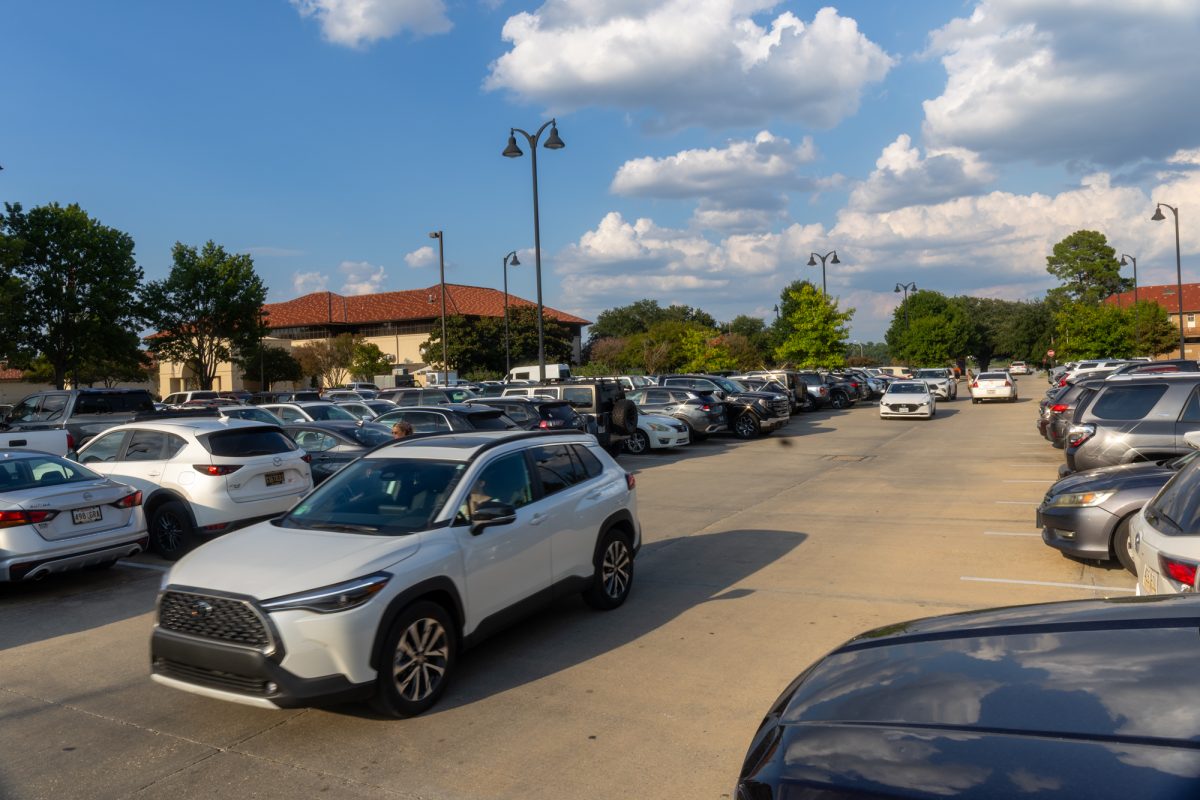
If the above timeline resonates with you, you’re not alone. LSU is out of parking passes, and as of last week, the waiting list to obtain one is at least 900 students long.
Of course, students who purchase a $50 “Park & Geaux” pass can park in the East Tiger Lot and take a shuttle to campus. But as Brandon Reynolds, a graduate student in the Department of Communication Studies, told me in an interview this week, “I was late for my meeting because my bus ran 15 minutes behind. This is unacceptable.”
For incoming freshmen and students new to campus, the parking crisis may seem like an aberration. But it isn’t. That LSU doesn’t have enough parking space to accommodate its students is a symptom of a broader problem: we’re admitting too many students.
In 2024, LSU admitted 7,912 first-year students, the most in the school’s history. At the time, then-President William F. Tate IV said that the university would need to undergo significant infrastructure developments to sustain its growing student body. The sweat stains on my shirt reveal that it hasn’t.
But it’s not just parking. On-campus housing is over capacity, causing LSU to temporarily relocate over 170 students to the Lod Cook Hotel and Ion Apartments. Class sizes remain high, which, as one Reveille columnist commented in 2017, is “detrimental to LSU students.” And last year, the waiting list for an advising appointment in the College of Humanities and Social Sciences was so long that I had to wait until July to find an open slot.
One solution is that LSU could deliver on Tate’s promise and bolster its infrastructure. But, clearly, that’s not going well. Therefore, an easier and more sustainable solution is that LSU should admit fewer students.
Most obviously, placing stricter limits on the number of students it admits would prevent LSU from having to constantly invest in new infrastructure projects. One reason a large student body might seem attractive to university administration is because it allows them to make more money in tuition — a financial boon that outweighs the cost of expanding capacity.
That view is misguided. For one, as a public institution, LSU should care more about the quality of the product its students receive than reaping surplus profits. We don’t pay thousands of dollars in tuition to wait in queues for parking passes and advising appointments, or to fade into the background of auditorium-sized lecture halls. We deserve better.
But also, prioritizing stretching campus capacity beyond its limits over improving existing educational infrastructure undermines the university’s long-term goals. The growth of LSU’s student body is driven by out-of-state students. These students are attracted to LSU because of the many resources it has historically offered the student body. Allowing those resources to crumble under the weight of progressively larger freshmen classes minimizes the incentive for out-of-state students to come to Baton Rouge in the first place.
We’re four days into the semester, and I’m already tired of walking to class. Louisiana’s flagship university is in critical condition, and limiting admits is its only lifeline.
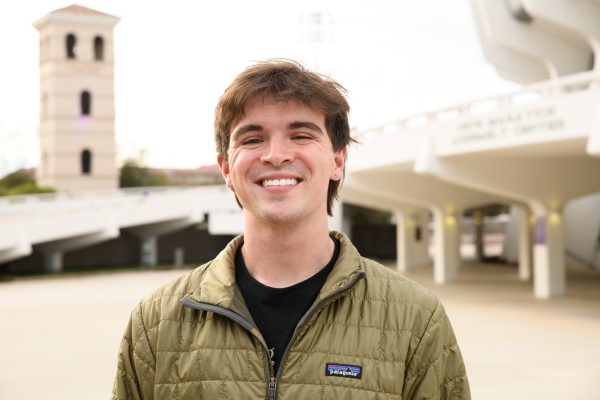
Cade Savoy is a political science and philosophy major from Breaux Bridge, La.