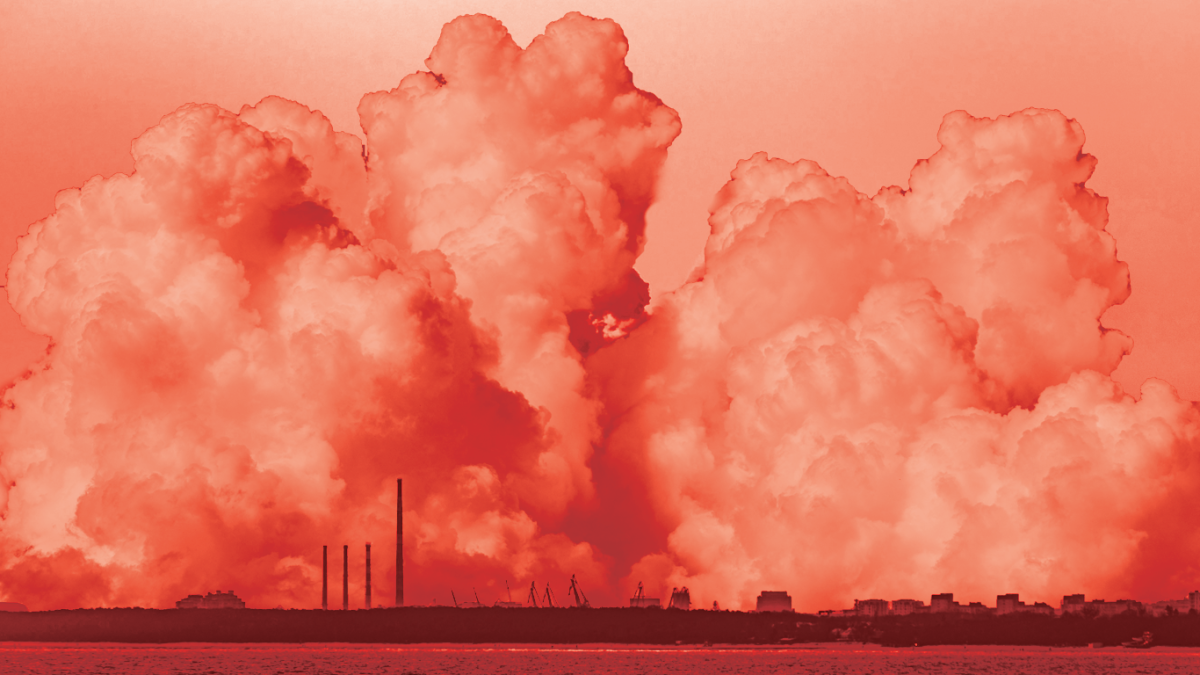
On August 22nd, 2025, smoke blanketed the tiny town of Roseland, Louisiana. The sky rained poison, ash spread across the land and a great tower of fire loomed overhead. It almost seemed as if the devil himself had come to Louisiana.
The nexus of this hellscape was Smitty’s Supply, one of the major lubricant manufacturers in the state. It was one of the primary economic engines of the town and now it was its undoing.
The greatest tragedy in this situation, however, is that this is merely a single episode in a centuries-long war by the State of Louisiana against its black citizens, all with the goal of extracting as much wealth out of their land as possible.
The plight of the majority black towns in the region colloquially known as “Cancer Alley” is a well-known, documented phenomenon. The mass expansion of the petrochemical industry along the southern Mississippi has led to cancer rates skyrocketing in the region, disproportionately affecting the predominantly black communities there.
However, it isn’t just limited to the valley, though it remains the worst case. Southeastern scientists recently discovered that toxic metal levels are rising in Lake Maurepas, with arsenic levels 6300 percent above the legal drinking water. Furthermore, the American Lung Association found Baton Rouge to be the worst city in the southeastern US for ozone pollution.
It is inarguable that the environmental impacts of the petrochemical industry in Louisiana have a tangible impact on the quality of life of our state’s citizens. However, instead of pursuing policies to address this severe crisis, the state has instead pursued profits at the expense of the people, particularly its historically marginalized black citizenry.
It makes sense, as the election of Gov. Jeff Landry, a full-throated climate change denier, in 2023 served as a giant green light for companies like Dow and Shell to crank up operations to 11. This was made fairly clear by the appointment of Tyler Gray, an oil company executive and petroleum lobbyist, to head the Department of Energy and Natural Resources.
For one company in particular, the new government proved to be a top lifeline. Denka Performance Elastors, which held a plant in majority-black St. John the Baptist Parish, was sued by the federal government over their plant’s emissions of carcinogenic chloroprene and given 90 days to remediate the issue. Upon taking office in 2024, Gov. Landry gave the company the full backing of the state’s legal apparatus, dragging the case out, and when President Trump ultimately took office in 2025, he quietly swept the case away.
The plant ultimately shut down in May, unable to meet even the far-lowered bar set by Trump’s EPA.
It can seem bleak to view the vast complexes in person. If you’ve never seen a chemical plant at night, I encourage you to drive out, climb to the top of the levee and look over the river. I won’t say it’s a beautiful sight, but it is impressive. The lights are overwhelming, never ceasing, illuminating billowing puffs of smoke. It truly lets you understand the immensity and destructive power these things hold. However, despite this, communities are fighting back.
Activists like Sharon Lavigne have been taking real tangible action to protect black communities and history in southern Louisiana. Lavigne founded “RISE St. James” to oppose a proposed new plastics plant by the Chinese company Wanhua in St. James Parish. After years of dutifully attending council meetings, organizing citizens through community events, and collaborating with other climate justice groups, Wanhua ultimately withdrew the plans.
This shows that we all have the potential and the power to step up and take action to fight back against the destruction and exploitation of our state. When communities mobilize, real change is possible.
Louisiana must start listening to its citizens. Black residents have been outspoken for decades in favor of expanding regulations to limit pollution in southern Louisiana. Will increased regulations have a negative economic impact on the state broadly in the short term? Yes. But when you have a region that has a 95% higher cancer rate on average than the nation, shareholder profits must take a backseat for the time being.
Gordon Crawford is a 19-year-old political science major from Gonzales.