



Today, it’s not uncommon to hear people say something along the lines of, “We’re living in unprecedented times” — after all, it certainly does feel like it.
America’s government is corrupt and inefficient, and our officials do not represent the core values of our country. Party polarization has been taken to extremes, the wealth gap is growing and the middle class is shrinking rapidly. Impoverished Americans suffer while multimillionaires and billionaires cling to impossible amounts of money. Human labor is undervalued as we usher in the new digital era. Political assassinations have been on the rise.
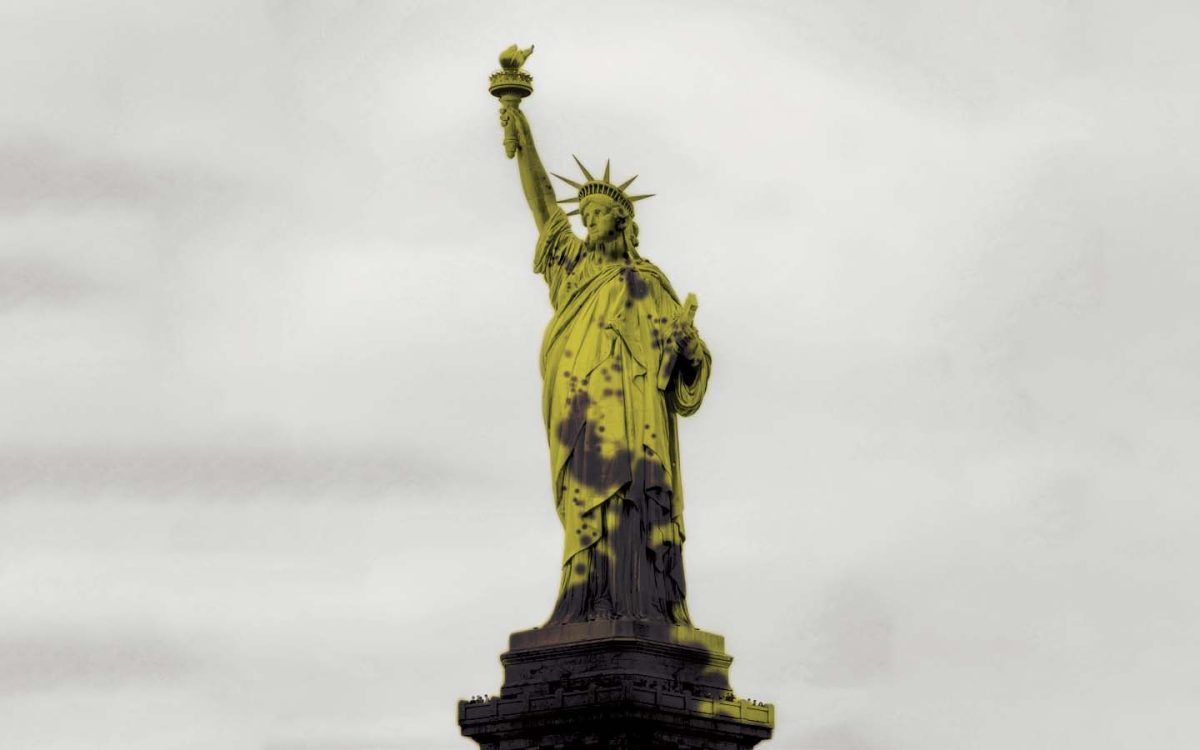
Frightening, isn’t it? In a time where the future feels uncertain, it’s important that we look to our past for answers. We have been here before. Welcome to the second Gilded Age.
Perhaps you’re familiar with America’s first Gilded Age, lasting from 1865 to 1901. Coinciding with the Second Industrial Revolution, the Gilded Age was a time of great prosperity and corruption fueled by the transition of America from a rural to an urban nation. The defining characteristics of the era are reminiscent of our own, and the famed era of American history was fueled by a trickle-down of wealth in society.
Robber barons, wealthy businessmen complicit in malpractice, were the unofficial aristocrats of the time. They hoarded wealth in a way never before seen in America. You’ve most likely heard the names of Andrew Carnegie, John D. Rockefeller, Cornelius Vanderbilt and J.P. Morgan. These titans of industry obtained fortunes larger than life and funneled them into some of the most important public works in American history, but they were not good men. They also revealed one of the worst habits of American corporate practice: abuse of labor. These men crafted the template for the ultra-wealthy of the modern age.
With the industrialization of America came technological advances. For the first time, human work was automated in a way that allowed actual human workers to be disrespected and disregarded. They were deemed unnecessary and were treated as such.
Much like the tycoons of the Gilded Age, American billionaires today such as Elon Musk and Jeff Bezos have taken advantage of the advancements of the digital age and dehumanized labor as a means of acquiring wealth. Unlike the tycoons of the Gilded Age, however, our wealthy today do not reinvest in society — they reinvest in themselves.
As the Gilded Age government officials gave way to the wants of the rich and left middle-class and impoverished citizens in the dust, others stepped in to keep society functioning for the everyman. Party politics ran rampant through the invention of political machines, which were mafia-like political organizations that stepped in to fill the authority gap.
Famous machines like New York City’s Tammany Hall performed a multitude of civil duties that the government otherwise would have, and they became the de facto authority of their regions. Similarly, our government today gives in to the wants of the rich and powerful, providing tax cuts where none are necessary all while increasing taxation for the average American, as inflation continues to climb.
The Gilded Age “kiss the ring” strategy revealed a symbiotic relationship between the rich and our government, except our day’s version seems to be a more parasitic one. Government officials today have chosen to actively ignore those who elected them in favor of courting the rich and powerful; unlike the Americans then, however, we have less civil organization to fall back on and instead have had to resign ourselves to the only means of action available: protest. We’re very much broken machines misfiring without anyone to spearhead any civil recourse.
Political machines then are akin to party polarization now — so much work goes into manipulating situations as a means of gaining the upper hand. Arguably, the worst facet of the Gilded Age was the rise of political assassinations. Americans during the Gilded Age felt slighted by a lack of government aid and responsibility, so they sought their own means of accountability.
Between 1865 and 1901, there were three high-profile assassinations: Presidents Abraham Lincoln, James Garfield and William McKinley. It was a volatile period in which Americans felt they could and had to take matters into their own hands to end what they saw as tyrannical negligence.
Today, a similar and ominous trend is seemingly on the rise. In the last year, President Donald Trump was almost assassinated, Minnesota’s late Democratic House Speaker Melissa Hortman was shot and killed and activist Charlie Kirk was brutally murdered at one of his speaking engagements for Turning Point USA.
It’s notable that the Gilded Age ended with America’s entrance into World War I and its subsequent struggle during the Great Depression, both cataclysmic events that forced the country to reevaluate itself. It feels as though we are now at an impasse of a similar kind, which will not be cleared unless something major occurs. Surely you can feel the tension in the air and on your screens, in the papers and at your dinner table — something major is coming, the product of rapid advancement and cruel dehumanization.
As Robert Frost once wrote, “Nothing gold can stay,” and no gilded age is forever. In the coming days, it’s important that we look back into our history, lest we are doomed to repeat it, or worse.
Riley Sanders is an 18-year-old biology major from Denham Springs, La.


