In the 2021 SEC softball tournament, Auburn and South Carolina took the field for an opening-round matchup, and the game featured a catastrophic and odd injury.
Two-way Gamecock Cayla Drotar dove back into first base, but stuck in the dirt of Rhodes Stadium. In doing so, she turned into a scorpion with her feet coming over her head. Unfortunately, the Auburn first baseman, Justus Perry, was at the receiving end of Drotar’s cleats.
After this collision, the NCAA began talks of requiring a double bag at first base, and in 2026, all softball teams must have one.
But the double base didn’t start because of a collision at the SEC tournament; it originated in Little League Baseball and Softball. And while it might have been added for safety, it could mess with the game’s natural flow.
“The double first base is also used at youth and international levels of softball,” said Tina Phillips, NCAA softball committee chair, in a press release. “So the committee believes the adjustment for the players should be a smooth transition. The players are coming in familiar with this rule.”
Young players learn how to play first base and run bases with a double bag. It is used to teach them how to properly position their feet defensively and how to safely run through first base on offense.
After players leave the 7- and 8-year-old age groups, they usually know how to run the bases safely enough to get rid of this bag, and it becomes nothing more than a teaching aid.
These kids don’t play past a state tournament, and they won’t until they are 11 or 12 years old. However, in 2025, Little League implemented it for 11- to 16-year-old teams in the Regional and World Series rounds.
But outside of Little League, diamond-sport athletes usually won’t see a double bag again until they reach the collegiate level.
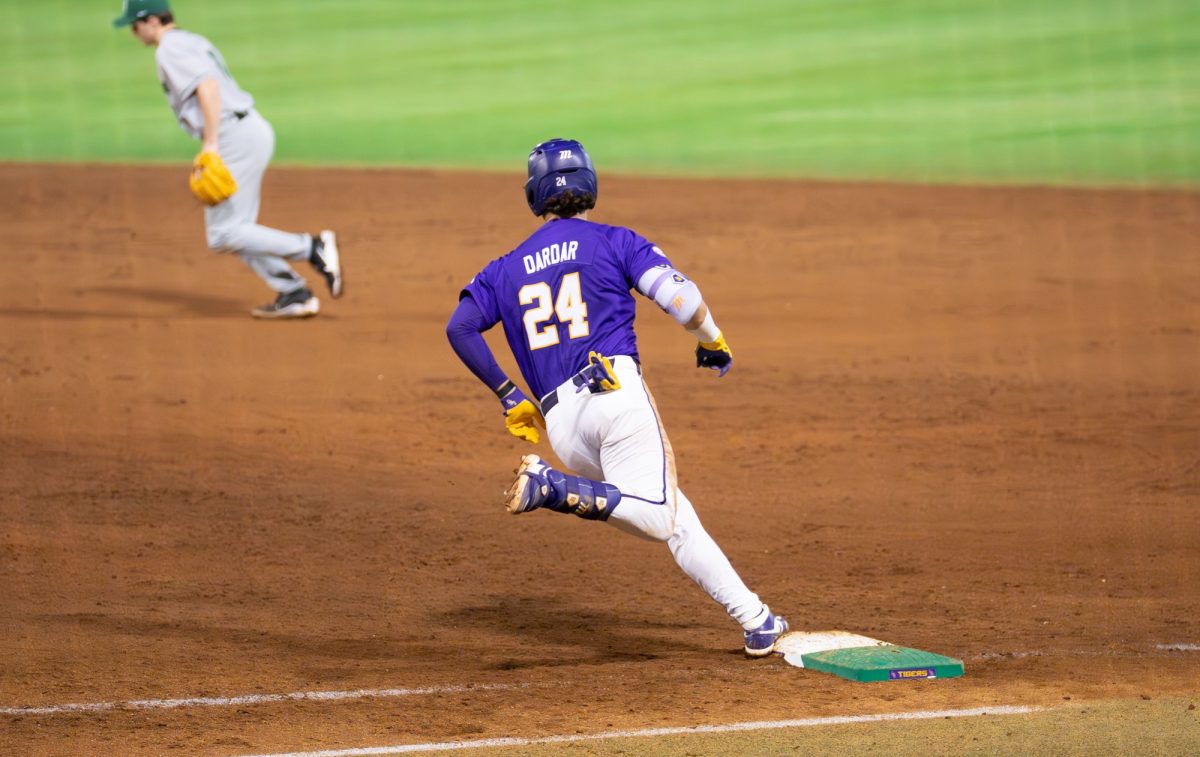
In 2025, LSU baseball debuted the green, secondary bag next to the traditionally white first base, but the softball team didn’t implement it until the 2026 season, when it became mandatory for all teams.
NCAA softball has made the permanent change, but baseball hasn’t fully transitioned across the league.
The secondary base was mandatory in the 2025 college baseball postseason, but it still isn’t required for regular-season baseball games as of 2026.
While the NCAA says it should be a smooth transition, there are a few technicality rules that aren’t applied in that 7- to 8-year-old age group.
At that level, dropped third strikes, pick-offs, and the ball IQ of hidden ball tricks don’t exist yet, so the little details collegiate athletes see weren’t a big deal.
Pickoff attempts and hidden-ball tricks make some of the game’s natural instincts change with the extra base. After playing a sport for over a decade, these collegiate athletes will make the mistake of just feeling for the base to make sure they’re standing on it, not looking to make sure they’re on the white side of the bag.
Players have retreated to the base after a pickoff attempt, but will reposition to accidentally stand on the green part of the bag. When a first baseman notices this, a hidden ball trick isn’t hard to pull off.
All the first baseman has to do is reapply the tag to secure the out, and while the NCAA says the players are used to the bag, there have been cases where it clearly isn’t.
First basemen are taught to stand on the foul territory side of the plate after dropping third strikes when the ball reaches the backstop. This is one of the few exceptions to the foul-and-fair side of the bag rules. The NCAA allows the runner and first baseman to make the play as expected, but the umpire must decide which play is needed.
Umpires are human, too, and all it takes is one mistake to turn a hotly contested SEC game into a shambles.
Along with official mistakes, the athletes see the entire base as first base, leading to errant throws that take the first baseman off the white part of the base.
These changes are implemented for safety reasons, and rightfully so, but with every change added, there are issues to overcome before it becomes foolproof.
Since this is only a trial run for college baseball, there will most likely be more kinks to work out before it’s implemented.