


The African American Cultural Center hosted “The Crisis Of A Culture” Monday night, a forum designed for students to discuss issues pertaining to black New Orleanians in the aftermath of hurricanes Katrina and Rita.
The forum covered a number of issues, from the cultural impact of the hurricanes to governmental shortcomings and the political impact of storm-related demographic changes.
“We can talk about how terrible it is, but we have to talk about what we can do about it,” said Angeletta Gourdine, director of the University’s African and African-American Studies program.
One issue the forum discussed was how displaced New Orleanians should be labeled.
“I think the media has taken a strong role in how we label people,” said sociology professor Thomas Durant. “Do you distinguish between the ones that left before the storm and those who were plucked off their roof? Let the people decide how they should be labeled.”
Durant and others in the audience said they preferred the term, “survivor,” to “evacuee” or “refugee.”
“I still feel like I’m in America,” said displaced Tulane University graduate
student Brandi Tregre. “I think ‘refugee’ has a negative connotation.”
Isaac Netters, forum facilitator and moderator and the coordinator of African and African-American student affairs, said all those who left New Orleans will be labeled regardless of their situation. The bigger issues, he said, were of rebuilding and of gentrification.
Gentrification is the upgrading of rundown neighborhoods by more affluent citizens. In New Orleans, this process displaces poorer and predominantly black Democrats.
“The debate needs to be an inclusive debate,” Netters said. A debate which he said needs to include the voice – and political voting power – of those displaced from the city.
Some said the disaster has only intensified a process already starting to take place.
“Will we have a black person on the City Council [in New Orleans]?” said displaced Tulane senior Kelley Bagayoko. “People have been trying to gentrify the city of New Orleans for a while.”
Gourdine said the city of New Orleans, especially the 9th Ward area, is of great political strategic importance in state and local politics. She said the political landscape will change if many of the displaced people do not return to the area.
While all agreed that displaced persons should return, Durant was cautious as to how this should be accomplished.
“Some [politicians] are more concerned about getting people back to form a political base than they are about the welfare of the people,” he said.
Still, students and faculty alike expressed concern that gentrification could lead to a situation where poorer residents could lose political clout.
At the conclusion of the program, Netters and Gourdine solicited ideas and volunteers to form an action committee and eventually craft a proposal to submit to political leaders about what New Orleans should look like.
Regardless of the future, it cannot erase the horrors of the two hurricanes.
“Every big moment in African-American history has been preceded by suffering,” said general studies senior Collins Phillips III. “No matter how much good comes of this, I still wish it never happened.”
Contact Mathew Sanders at [email protected]
Rebuilding a Culture
October 11, 2005
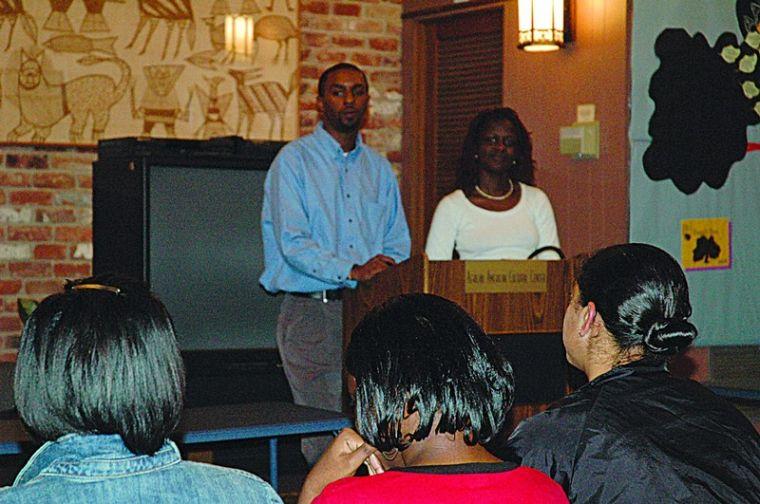
Isaac Netters and Angeletta Gourdine facilitate a discussion with students Monday evening about the effect of Hurricane Katrina, specifically dealing with racial issues and long-term repercussions after the mass evacuation of New Orleans.
Rebuilding a Culture
More to Discover


