LSU has always had a bit of a problem with names.
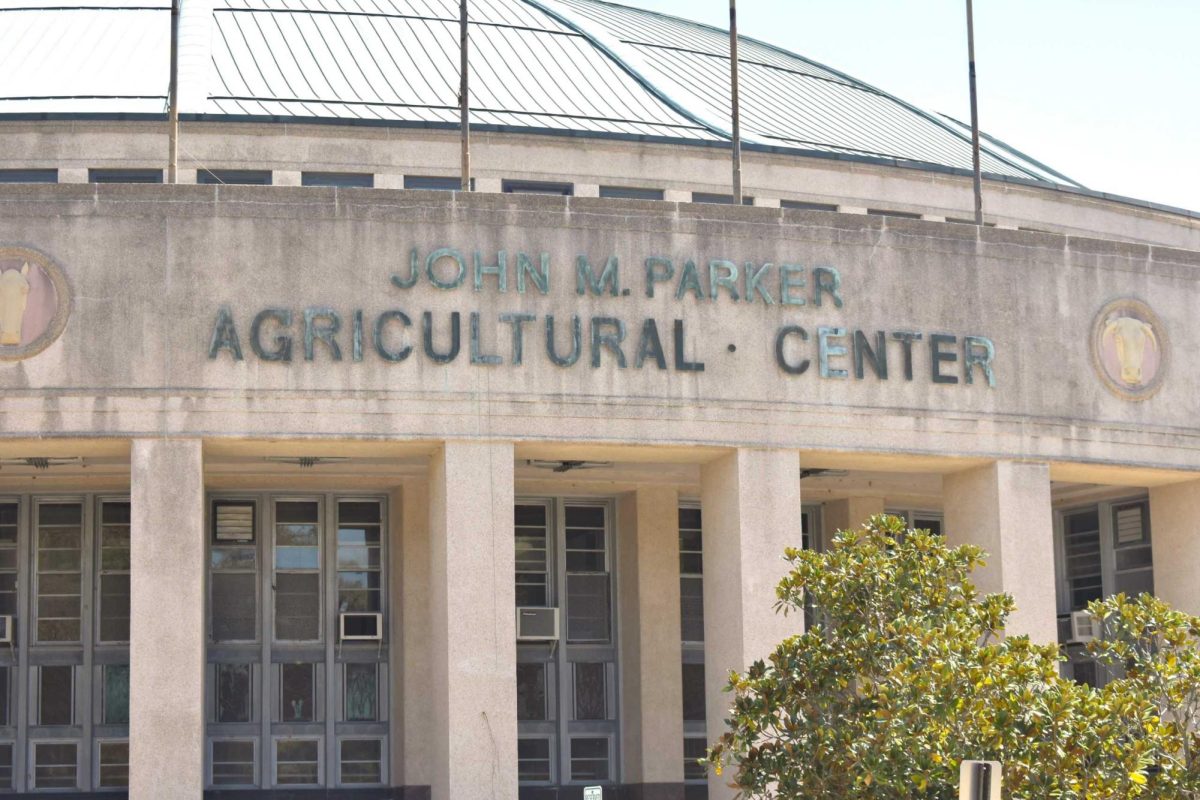
If you explore campus for just about any length of time, you’ll quickly find a who’s who of Confederates, segregationists and, in the case of former Gov. John M. Parker, lynching participants.
Student Government has lobbied for years to remove these names, a request which the university has occasionally decided to entertain. However, progress on this front typically fades as quickly as it comes, with the committee organized to address the issue being shelved in 2021.
The centerpiece achievement of the renaming campaign was the successful removal of Troy H. Middleton’s name from the LSU Library. Middleton, the president of LSU through most of the 50s, was an ardent segregationist and opponent of the acceptance of Black students.
The building never found a new name. Bigger projects and relentless expansion quickly overtook the university’s focus.
Now, that expansion has come to fruition: construction has begun on a new library and ground has been broken on a new housing project as well.
With these new projects reshaping campus and serving as major draws for prospective students, I think it’s important that the university renew its efforts towards righting its historical wrongs: the names of the new buildings, as well as the old, should celebrate LSU’s history of student excellence instead of honoring its cavalcade of historical racists.
A number of worthy candidates are available, even going back to the very first class at LSU. The school has its roots as a military academy headed by Gen. William T. Sherman, who left the institution to take command with the Union Army.
When Sherman left, nearly every one of his students joined the Confederate Army, all except for one: Henry Bullard Taliaferro.
Taliaferro remained both loyal to his country and to Sherman personally, remaining one of the last students to wish Sherman goodbye before he left. He then made a daring journey up the Mississippi, avoiding capture by Confederate troops, and served in the First Louisiana Cavalry.
Later in life, Taliaferro published an editorial in the National Tribune pleading for the memory of Southern loyalists — those who faced at times fatal consequences for their love of country — to be kept in the face of the growing public worship of the Confederacy in the South.
Naming a building at his alma mater would be just one step towards righting that historical wrong.
Another worthy candidate is Isiah Warner, the first Black Boyd Professor, LSU’s highest professorial honor.
In his 44-year career, Warner published hundreds of papers and made numerous pioneering contributions in analytical chemistry, earning just about any professional recognition you can name.
However, his greatest legacy is as a teacher and mentor, helping to turn the LSU Department of Chemistry into one of the nation’s leading producers of doctoral degrees for women and minority groups.
Warner’s contributions to LSU are the textbook example of educational excellence, and his role in transforming the lives of its students and helping them to achieve great accomplishments deserves to be remembered for decades to come.
Another name that has been floated for some time is Ollie Burns. Burns was the first Black person to earn a master’s in Library Science from LSU.
She later was a significant contributor to the desegregation of Ouachita Parish schools and an architect of the library program there, becoming the first Black person elected to the library board in the parish.
Her dedication to the promotion of education and access to knowledge for all would make her the perfect namesake for LSU’s new library.
The issue of building names may seem like a relatively insignificant matter. However, the broader issue of representation is an incredibly important matter.
These buildings and their names tell the story of the university, and the people they choose to lionize are those who are officially written into that story.
The names that don building entrances will be spoken over and over for as long as their doors are open. As long as they remain, glorifying the many men of history who sought to oppress, deny and in some instances, kill those who have gone on to do so much to elevate the excellence of LSU, then the wounds of history will remain open.
Gordon Crawford is a 20-year-old political science major from Gonzales, La.