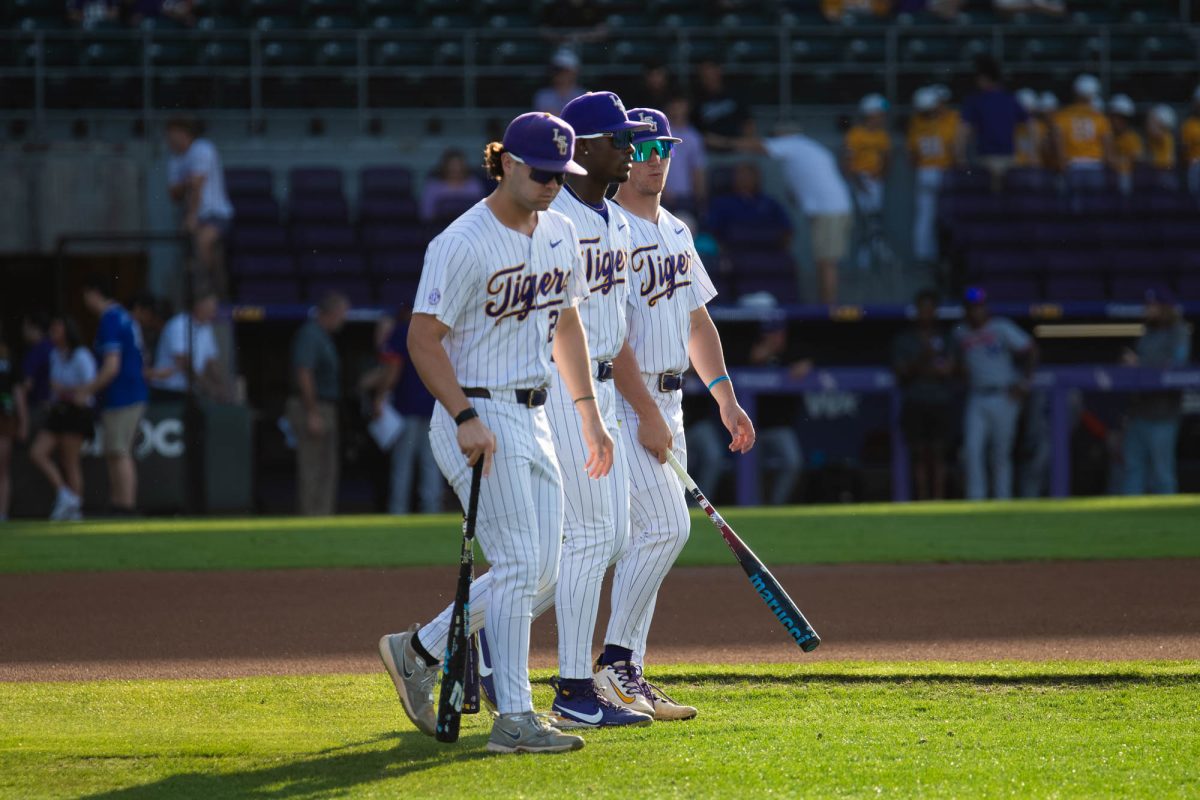
While LSU’s new athletic director Verge Ausberry seems to be drowning in expensive buyouts for old coaches and multi-million dollar contracts for their replacements, the challenge isn’t just spending money; it’s deciding where money should go.
New coaches, new talent, and new success raise a new question: which sport deserves the biggest slice of the revenue share pie?
The university currently has a 75-15-5-5 rule for annual revenue shares. As of June, the pot was split up with 75% to football, 15% to men’s basketball, 5% to women’s basketball and 5% to everyone else.
I know what you’re thinking: what about baseball? Well, the school’s athletic department threw them into the “everyone else” category after watching them win a national championship the week before.
It wasn’t that personal, though. Some sports require more funding because they are more expensive to operate. These sports also generate more revenue, and Title IX mandates ensure a more equitable distribution of funds. Still, the success doesn’t go over their heads.
Currently, baseball shares about $900,000 with tennis, track and field, softball and gymnastics.
But Ausberry has come in to save the day. Last week, he appeared on ESPN Baton Rouge Radio, where he told Matt Moscona that for the 2026-2027 season, LSU baseball will receive its own 5% of the shares.
Ausberry has made a plan to increase baseball’s revenue share, as well as the money available for NIL. This new financial boost to the program, according to Ausberry, will not come at the expense of either the football or the basketball programs.
He also mentioned that the school will continue to fund softball and gymnastics, with scholarship money to sports like track and swimming, to add new players.
His plan is generous. It also makes everyone happy. The only problem is that the biggest portions aren’t distributed based on success.
As we can see, baseball getting a 5% share didn’t touch basketball or football’s money. That’s not because they are the most successful programs every single season — unfortunately — but because they bring in money.
In all fairness, the process shouldn’t be a question: you win, your percentage goes up. But unfortunately, money doesn’t grow on trees. But it does grow in TV contracts and ticket sales.
So the philosophy is you make more, you get more.
But this isn’t about matching football’s scale; softball doesn’t need a headline-grabbing hire, and track and field doesn’t need a billion-dollar facility. But meaningful growth in exposure, success and engagement can translate into increased revenue.
It’s hard to ask for more from the already established LSU athletic programs, but it’s a reasonable expectation when a financial increase is requested.
Without meaning to step on anyone’s toes, LSU is just adapting to the modern world of millions of dollars being generated at the collegiate level, from packed stadiums to athletes’ NIL deals. At last, these college athletic departments can control the reins of where they directly give this money.
But now that the 75-15-5-5 model is maxed out to 100% across four sports, the question remains: are the additional promises to other sports backed by new revenue, or are they optimistic assumptions that the money will simply be there?
I’m no accountant, but optimism doesn’t balance a budget — or a revenue model.