Every year on average, 37 U.S. children under the age of 15 die of heatstroke from being left in a vehicle. In Louisiana, 39 children since 1998 have fallen victim to this horrific death. With rising temperatures around the globe, this issue grows graver by the second.
Three LSU students and one mentor decided to do something about it.
For their engineering capstone, seniors Victoria Irondi, Nnamdi Dike and Trevor Perrault designed a weight pad sensor that goes underneath a car seat. The sensor is connected to a Bluetooth fob on the car keys that emits a loud screeching noise alerting the parent if they move too far away from the car.
The idea came from retired contractor and businessman David Jenks. His son’s close friend tragically lost his six-month-old son in July 2024 from heatstroke in a car. Understanding that parents are often thinking about a million things all at once, Jenks wanted to create a device to protect children from forgetful minds.
That device was affectionately named the WISE Device, which stands for Weston’s Infancy Emergency Device after six-month-old Weston.
“God had put it on my heart,” Jenks said. “Years ago, he spoke to me and said, ‘Take care of my children.’ I started my own business doing remodeling and kind of got away from what I feel like his will for me was. And then he put this on me and slapped me in the face.”
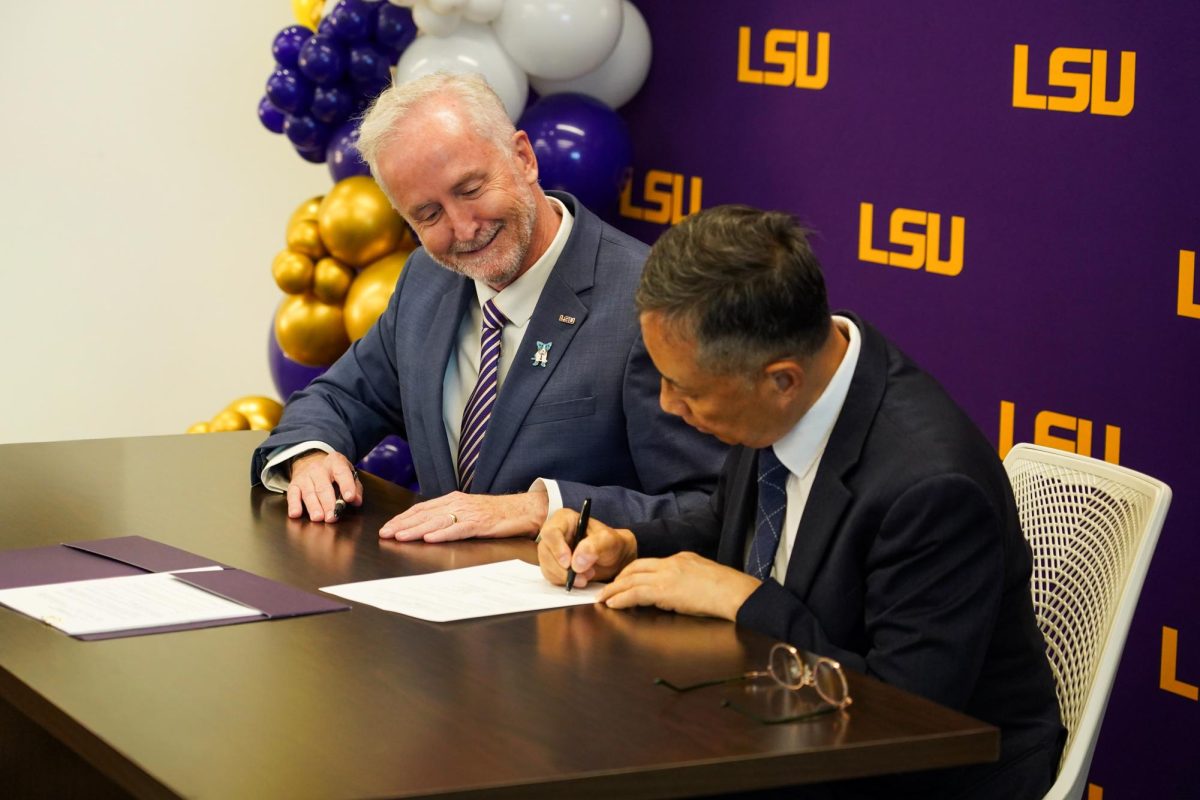
Jenks went to friend and former Interdisciplinary Capstone Coordinator at LSU Dave Giurintano with his idea. Giurintano suggested Jenks fill out the capstone project application, and shortly after LSU reached out asking Jenks to present his idea. Jenks’ project was soon approved.
Out of 64 capstone projects, Irondi, Dike and Perrault eagerly flocked to Jenks’ for its visible potential to help change lives.
“It was touching and reminded me why I wanted to go into engineering in the first place,” said Irondi, team leader and a now-graduate in electrical engineering.
Before the project, the three students were virtual strangers but quickly grew into a close-knit team eager to design the sensor. Irondi built the main system, Nnamdi, a mechanical engineer graduate, designed the Bluetooth key fob and Perrault, an electrical engineer graduate, built the weight pad.
Perrault, who has a six-month-old daughter, felt especially drawn to this project for personal reasons. When he attended the project presentations in the fall, his wife was two months pregnant.
“It just made me realize that I’m not immune to forgetting my daughter in a vehicle either,” Perrault said. “I forget stuff all the time that’s related to her, and it put into perspective that it can happen to anybody and to be extra careful all the time.”
The three students would have monthly meetings at Highland Coffees with Jenks to go over project details and future plans for the project. At one of the last meetings before they presented the final model, Jenks brought Weston’s father to meet the students to reignite their fire.
“We were starting to get stuck in the project mindset and getting it done instead of what the motivation was behind the project,” Irondi said. “After that conversation with him [Weston’s father], it reminded us why we were doing this. It wasn’t just to pass our capstone but to also make something that could make a difference.”
Moving forward, the students want to make improvements to the sensor that would allow SMS messages to send directly to the phone of the parent and an emergency contact. They also want to add vibrations to the alarm for audibly impaired people.
Jenks is working to get funding to mass produce this sensor. He has spoken with the Manning Family Foundation and is working to connect with car seat companies as another potential sponsor.
With no shortage of accolades and awards, Jenks is confident he will find a willing sponsor.
The project was recognized by Jim Cantore on The Weather Channel, a WBRZ news segment, a channel 9 segment and many other news stations. The Louisiana Highway Safety Commission also honored the students, bestowing them each with a certificate of merit and a glass statue.
The students had the mindset that with all the distractions that go on in the world, even the best parents sometimes need a little help.
“The point of the project for me was to raise awareness of what happens and what can happen,” Dike said. “I want parents to have that protection and also the sense of humility that it could happen to you.”
Jenks has plans to start the Weston Foundation so that any person who can’t afford a sensor can get a free device. Any profits he receives from the sensor in the event it is mass produced will be put towards this foundation.
“God’s going to put the right person in front of me,” Jenks said. “I know it because it’s his will. This is God’s project.”