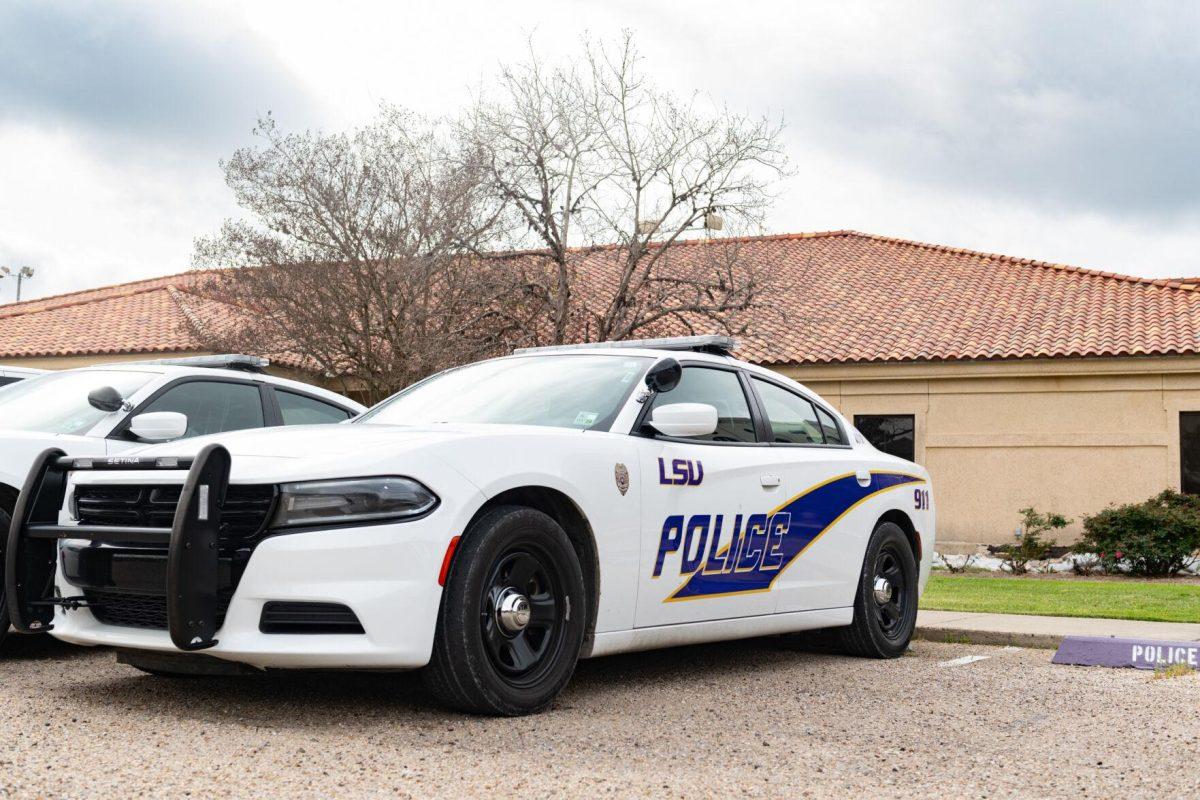
Michael Antoine is LSU’s Department of Campus Safety, Emergency Preparedness and Emergency Response Vice President.
Since starting his position in 2023, he has transformed the department to focus on investing in students and restoring trust in the administration.
Antoine was appointed to this position in August 2023. But his hard work didn’t start here. Antoine’s career started over 25 years ago when he joined the New Orleans Fire Department at 19 years old. At just 26 years old, he became the youngest captain in the department’s history.
He has served in various advanced roles including Deputy Director of Homeland Security and Emergency Preparedness for the city of New Orleans under the previous Mayor Mitch Landrieu and Director of Public Safety & Emergency Preparedness at Tulane Health System.
One of the biggest accomplishments was his personal involvement as a first responder during Hurricane Katrina. The storm was significant for Antoine and acted as a stepping stone in what his life’s work turned out to be.
“For me, it was personal and professional,” Antoine said. “I was born and raised in New Orleans, and the people impacted by the storm were my people. But I also had a job to do.”
Many first responders during this time didn’t immediately realize the levees were broken and assumed it was a storm surge. This caused responders like Antoine to adapt to using boats instead of fire trucks to rescue residents.
His most lasting memory of the storm was the silence and emptiness of New Orleans.
“As far as your eyes could see, all you could see was water,” Antoine said. “It was dark, it was quiet– and if you’re from New Orleans, you’re never used to the city being quiet.”
The past events Antoine experienced have driven his philosophy on safety and resilience within a community. The work he does on LSU’s campus is directly tied to his own research.
Antoine is a current doctoral candidate and part-time professor at the Tulane School of Public Health & Homeland Security/Emergency Management. His dissertation topic is diversity in public safety and its impact on community resilience and disaster outcomes.
He stresses the fact that resilience is about people and not just infrastructure. Based on the community he witnessed during the natural disaster, Antoine came to the conclusion that representation in public safety builds trust and speeds recovery after disasters.
“The number one thing in creating community resilience is trust,” Antoine said. “If I don’t trust the people in charge, you’ll never influence me to do anything you say.”
As the associate vice president for Campus Safety, Antoine has integrated different initiatives to improve students’ safety while on campus.
Tiger Patrol is a 12-hour shift designed to increase police presence on campus. According to Antoine, crime has decreased 17% on campus since its creation. He also has future plans for a centralized system to lock down the campus remotely in case of a threat. Reunification sites during emergencies are also to be implemented over time.
Antoine has a lot of responsibility on LSU’s campus. When he is not protecting students, he can be found reading, catching up on LSU football or working out. He said his mindset is always preparing for the “next threat” because public safety is constantly evolving.
“You can have all the infrastructure and resources,” Antoine said, “but if you don’t invest in the people, the community will never be resilient.”