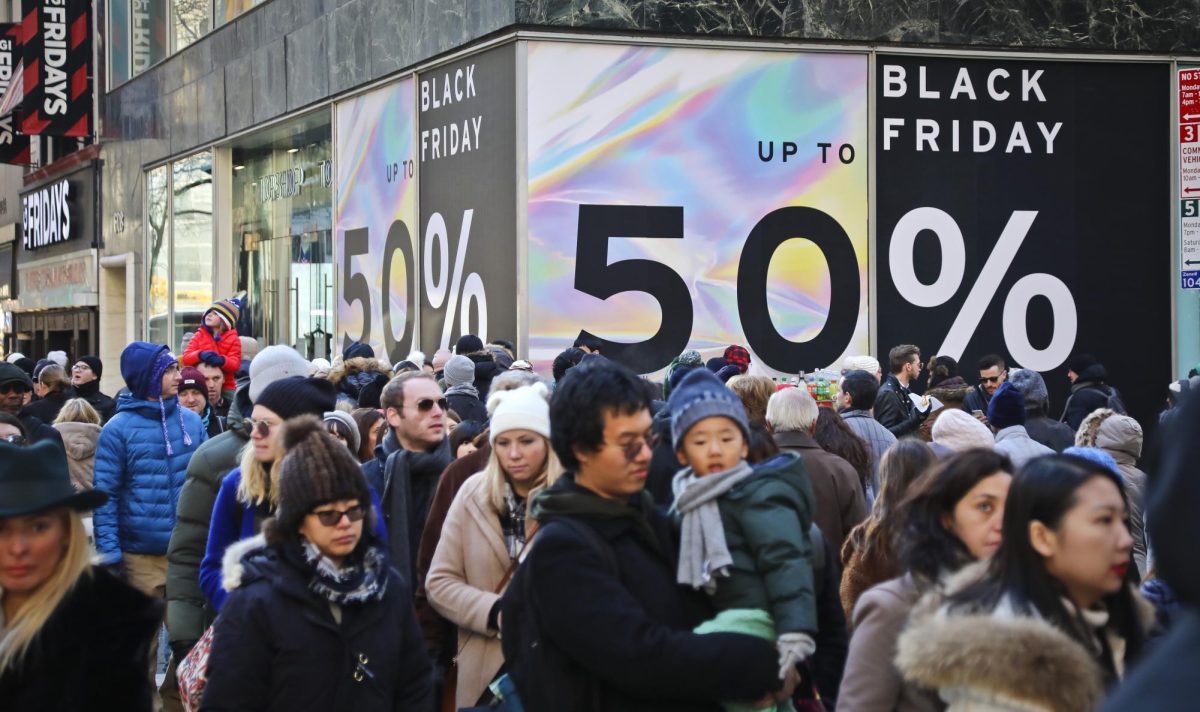
The holiday season is upon us, and with it comes the biggest day of the year for retail: Black Friday.
Whether you’re shopping for early Christmas gifts or hunting down some major deals, it is important to remain informed as a consumer to make sure you’re getting the biggest bang for your buck.
“I think it’s important for consumers to do their homework and make sure that if they do buy something, they know what kind of deal they’re getting.” said Dan Rice, an associate professor of marketing at LSU.
Thanksgiving weekend marks a major boom in shopping, and this year is anticipated to have the biggest consumer turnout on record. According to the National Retail Federation, an estimated 186.9 million people have plans to participate in the holiday shopping spree. This number is up 3 million from last year’s record of 183.4 million shoppers.
Black Friday is expected to see 70% of these consumers, while the other 30% will be spread across Thanksgiving Day, Cyber Monday, Small Business Saturday and that same Sunday.
Consumers love Black Friday for its deals and discounts, but businesses also have an incentive to roll back prices for the holiday weekend. This season (November through December) alone is enough to drive around 20% of annual sales for most businesses, said Rice.
It is no wonder, then, that Black Friday has remained a constant Christmas season staple. And with more and more businesses pushing online sales in addition to in-store purchases, it is easier than ever to participate in Black Friday spending.
“People are expecting you to have multiple channels for them to shop in, and multiple ways for you to pick up the product,” Rice said. “So maybe that’s order remotely and pick up in-store, pick up curbside. And that’s really becoming more of a necessity than an option for a lot of places.”
But despite this increase in accessibility, many people may choose to sit this Black Friday out, or at least be a bit more frugal with their money. Inflation, job insecurity, unemployment and high prices due to tariffs on commercial goods are all factors that can impact consumer spending. Rice predicts that it will be the higher income households that drive sales this year, as they are less directly impacted by the shifting economy.
However, he qualified his prediction by saying that even if people in higher income brackets are spending more than people in lower income brackets, the net increase in sales may be attributable to the higher cost of goods rather than the actual volume of goods purchased.
No matter what your budget is, it is important to be mindful of which deals are worth braving the crowds. Before making any purchases, compare the sale to the normal retail price of the product, as some businesses will have overly-inflated reference prices to make the sale seem even steeper. Price scanner apps can be a useful tool in comparing prices across stores. For example, the Amazon app has a barcode scanner built into the search bar.
AI tools can also be used to compare prices, but because the technology is still relatively new, it may not be the most reliable source to consult before making a purchase.
Overall, Rice advises shoppers to do their research before making any impulsive purchases and avoid getting caught up in the rush of shopping this Black Friday.
“Having some idea of what the product you’re buying usually sells for can give you a better gauge of whether you’re getting a good deal than just reading the sign in the store,” he said. “It may be a wonderful deal, but it may be very average.”