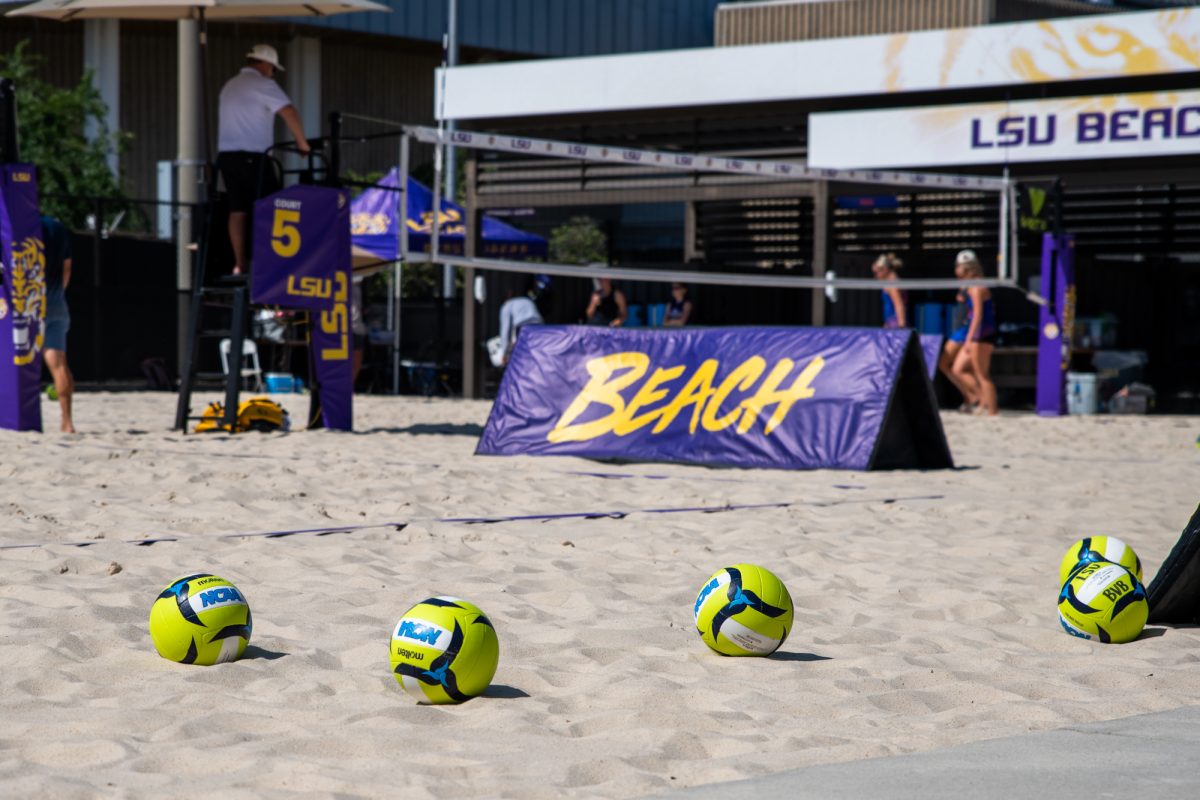
LSU beach volleyball’s 2026 season will soon begin with its annual Purple vs. Gold scrimmage at home on Valentine’s Day.
For fans who are new to the sport or simply unfamiliar with beach volleyball rules, there are often questions that arise about the difference between beach and indoor volleyball.
What actually makes beach volleyball different?
The most obvious aspect is the sand.
Rather than an indoor court, collegiate beach volleyball is played on the sand. LSU has an outdoor volleyball stadium filled with 24-inch deep sand and six different courts. The stadium, which used to be LSU’s previous tennis facility, was unveiled in 2019 and has been home to the Tigers beach team ever since.
With the stadium being outdoors, weather is a huge factor in how matches turn out. Especially in Baton Rouge, fans, coaches and players certainly know that weather can sometimes be an issue during the season.
“Last year, our biggest challenge was the weather, but this year we’ve had perfect conditions and have been able to push hard every day,” Tigers head coach Russell Brock said about the team’s first week of training.
Another main distinction between beach and indoor volleyball is that beach is played in pairs. There are only two athletes on each side of the net, as opposed to indoor, where there are six players on the court at a time.
In beach volleyball, there are no bench substitutions. That requires the two players on each team to remain on the sand until the match is over.
Beach volleyball contrasts with indoor in terms of scoring as well. In beach, sets are won by the first team to reach 21 points rather than 25.
In addition, the number of sets it takes to win a match is different, with beach volleyball match-wins being the first team to claim two sets. In both beach and indoor, the tie-breaking set is to be played until the first team reaches 15 points.
The biggest difference in terms of rules between the two variations of volleyball comes down to the technicality of the sport. When passing and serving in indoor, players can use “soft fingers” to keep the ball in play and pass over the net, which is when a player’s hand is relaxed.
In beach volleyball, players are not allowed to use this technique and must firmly pass the ball over the net with straight locked fingers or the palm of their hand.
While beach rules may objectively be a little stricter, especially when it comes to technicals, there are many reasons for players to prefer to play in the sand rather than on an indoor court.
Laurel Cassidy, a freshman libero on LSU’s indoor team, used to only play beach volleyball for the last two years of her high school career. For Cassidy, that decision came down to personal interest.
“I started [beach] when I was like 14. I liked it a lot more than indoor when I first started, my brain just liked it more,” Cassidy said about why she previously stepped away from indoor volleyball before her return. “I liked only having two people.”
While Cassidy’s faith led her back to indoor with the Tigers, she still thinks about beach volleyball every now and then. Cassidy sometimes finds herself missing the sand and the vibe of beach volleyball, she said.
Whether Tiger fans are new to beach volleyball or patiently waiting for another season, there’s a lot to be excited about this season. Along with prominent returners, the Tigers have seven new additions to the roster ahead of the season. With practice back in session, LSU is undeniably eager to compete.