Before the break of surface tension and in the depths of Louisiana’s muddied waters, there lived many kinds of organisms that contributed to the greater whole of the land. The Aquatic Ecology Club at LSU is exactly the place to learn about how these aquatic organisms live, interact and give back.
The AEC meets once a month to offer students an opportunity to explore the world of aquatic organisms and how they interact with both each other and their environment. From educational discussions to outside-the-classroom excursions, the club doesn’t miss a chance to study the watery creatures that make up Louisiana.
The AEC, formerly the Fisheries Club, was a dormant organization for a while after all of its officers graduated at the same time a few years ago. With the encouragement of assistant professor Garrett Hopper, the club was then revived in the fall of 2025 by students working under him in the Fish and Mussel Ecology Lab.
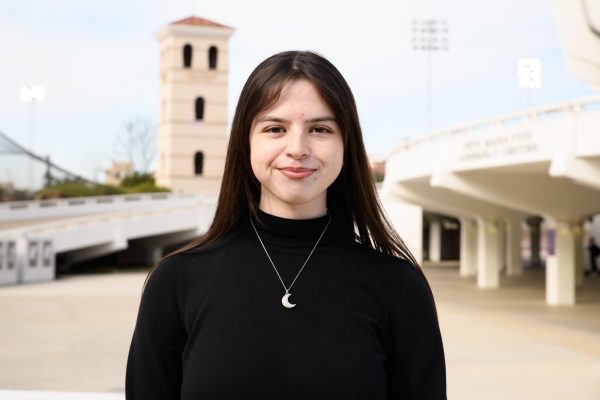
Franchesca Ruiz, a senior wildlife ecology major, is the AEC’s treasurer. She joined the club and became an officer to help with the club’s revival. Ruiz even specializes in studying freshwater mussels.
The club treasurer said she got sucked in by accident because of her position in the lab, but she has found it enjoyable because of what the club does. It also gives her a chance to be a part of the school’s extracurriculars.
“I don’t really participate in this kind of school stuff too much, so it’s nice to be a member of a club my last semester,” Ruiz said.
Last semester, one of the club’s meetings was ornament-making to go along with the winter season. The club’s officers collected different papers, air-dry clay and other materials for their members to indulge in their aquatic, artistic visions. Members made fishes with Christmas hats on, and one member even made a whale shark. They then hung up their ornaments around the inside of the Renewable Natural Resources building.
Ruiz said they are looking into doing arts and crafts for fundraisers later on when the club has a firmer stake on campus.
In order to maintain a balance of fun and professionalism, the club also holds informational meetings that center around talks given by club officers or graduate students. The guest speakers talk about the unique aspects of their jobs and tasks while also highlighting memorable moments of what they do.
These types of meetings can also involve demonstrations. Since the guest speakers study animals and meetings are held in the Renewable Natural Resources building, it is easy for the club to take out specimens for members to observe up close.
“We had a bunch of wet specimens we took out and laid out for everybody to be able to look at, like sharks and fish,” Ruiz said. “We also did bug collections, mussels, things like that.”
Ruiz explained how aquatic ecology as a field is very broad, though most people typically think of water and fish when they hear the name.
“We wouldn’t expect anybody else to know this, but in reality, it might be all the waterfowl using that water, all of the macro and micro invertebrates, all of the random little bugs and squiggly things in the water,” Ruiz said. “We just want everybody to get a taste of a little bit of everything. So, at least at the end of the day, when you leave the club, you know that water is cool and more than just fish.”
Beyond the walls of the meeting, club members have the chance to participate in outdoor expeditions, volunteer work and outreach opportunities. In the past fall semester, the club went on a group fishing trip to the Blackwater Conservation Area.
Previous fishing experience was not required for the excursion. It served as both a learning experience for those still getting the hang of fishing and a social hangout.
Ruiz’s favorite part about being an officer is being able to impart knowledge onto underclassmen and people just starting out in studying aquatic ecology. She said it is exciting to talk to younger people who are not quite into everything yet, and she can help them get into the groove of the aquatic ecology-related majors.
The AEC’s purpose is to urge students to become involved in their local environment and to show appreciation for the various aquatic resources that reside in this state.
“We’re very lucky here. We have all of our bayous, but we also have marsh. We have the Gulf. We have a lot of fresh water, and you would be shocked to learn how much stuff lives in all of it,” Ruiz said. “Our main goal is to get people educated and make it presented in a way that’s not intimidating or super confusing.”