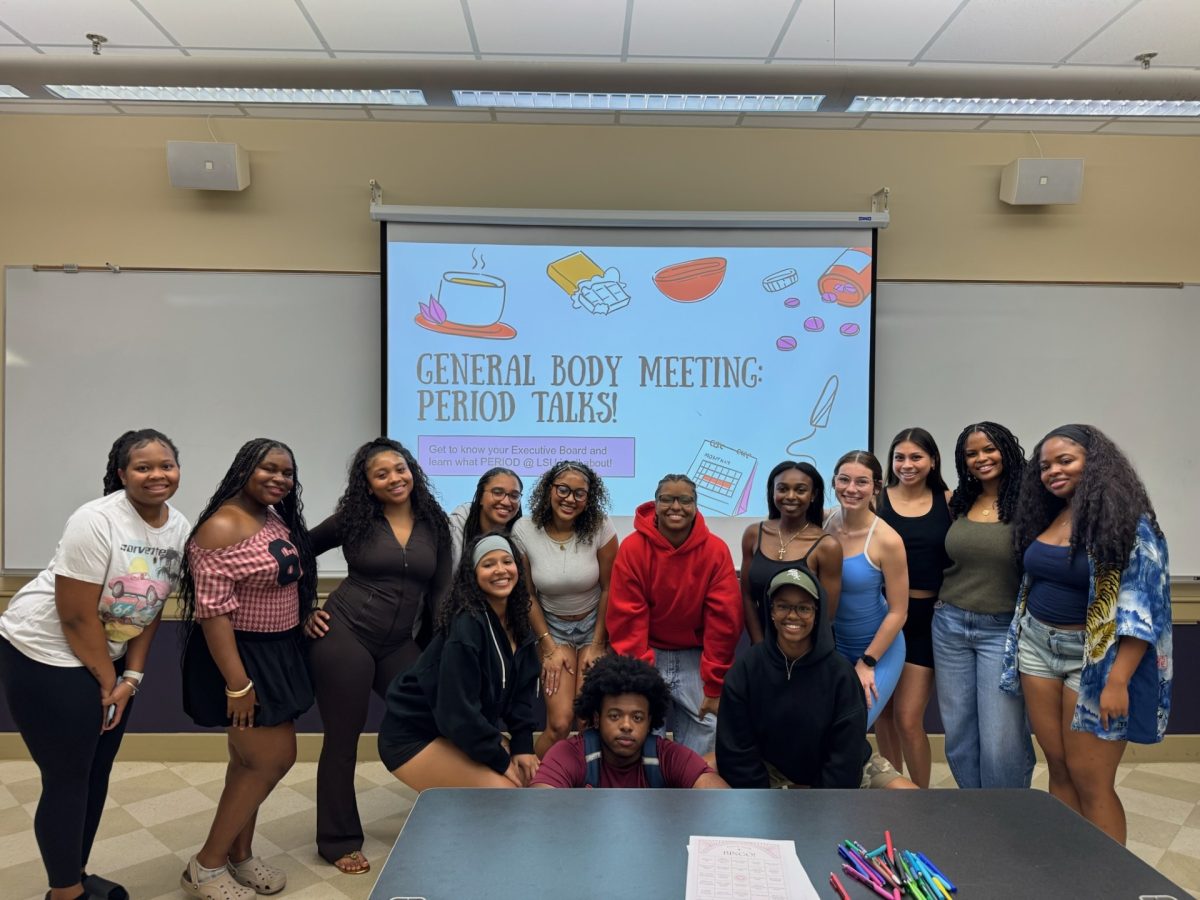
Period at LSU is working to eradicate period poverty and menstrual stigma on campus and in the Baton Rouge area.
The club is a chapter of a global organization that advocates for affordable, untaxed and publicly accessible menstrual products. The group has also created an educational curriculum about menstrual cycles and distributes thousands of period products to communities in need.
Ava McCombs, a coastal environment sophomore, founded the LSU chapter of the club because she wanted to create a safe space for students to share their experiences dealing with a period and learn from others around them.
McCombs herself has dealt with painful periods all her life and was diagnosed with endometriosis in January. She believed that by sharing her experience with others, she could encourage women on campus to seek medical help sooner if they have similar symptoms.
“If you’re going into a space where you hear somebody has a similar experience to you… I hope that the talks… encourage you to get the help that you may need,” McCombs said.
She emphasized how important it is for women to learn from each other because symptoms that go unchecked can develop into something more serious.
“I’ve heard many stories of women… like they just waited too long [to get help], or they were told they were fine when they really weren’t,” McCombs said. “If women aren’t allowed to have those spaces to talk about it, things could… develop worse and worse.”
Jayden Thomas, vice president of Period at LSU and a sophomore marketing major, also suffers from endometriosis. She pointed out that negative stigmas around menstruation have contributed to a lack of education surrounding women’s health.
“I think periods have such a negative stigma, so not many people are as educated on them… a lot of women go years or never get diagnosed with [endometriosis], and they just think they have a really bad period,” Thomas explained.
Black women, especially, are hesitant to seek medical help because their concerns are often ignored, which can lead to an overall sense of distrust and frustration with the health care system. McCombs hopes that the organization will encourage Black students to seek medical care despite these hesitations.
“Black women often especially are systematically more ignored than our white counterparts and therefore may not be willing to even go in and see what may be wrong,” McCombs said.
In addition to creating a safe space for students to learn from each other, Period at LSU is also working to address period poverty in the Baton Rouge area.
“Period poverty actually affects the Baton Rouge community more [than LSU students],” McCombs said. “Many people live below the poverty line in Louisiana as a whole, [limiting] women and children who are menstruating to have access to the period products that they need.”
Menstruating is not only a physical tax on the body but a financial burden for many women living in the United States.
The club plans to help women struggling to afford menstrual products by making packages full of period products and distributing them at women’s shelters in Baton Rouge.
“One thing that we’re going to start doing is making packages for women’s shelters… because not only do you get your period, and it’s like a lot on your body, but also it’s a lot when it comes to money,” Thomas said.