During Sexual Assault Awareness Month, LSU programs and organizations come together to support and educate students on available resources.
Although initiatives to prevent and handle sexual violence on campus are present year-round, April marks a time when the campus amplifies these topics.
“[The month] serves as a major opportunity to highlight conversations surrounding consent, healthy relationships, bystander intervention, community support for survivors and available support services across campus,” said Natalie Walton, associate director of The Lighthouse Program.
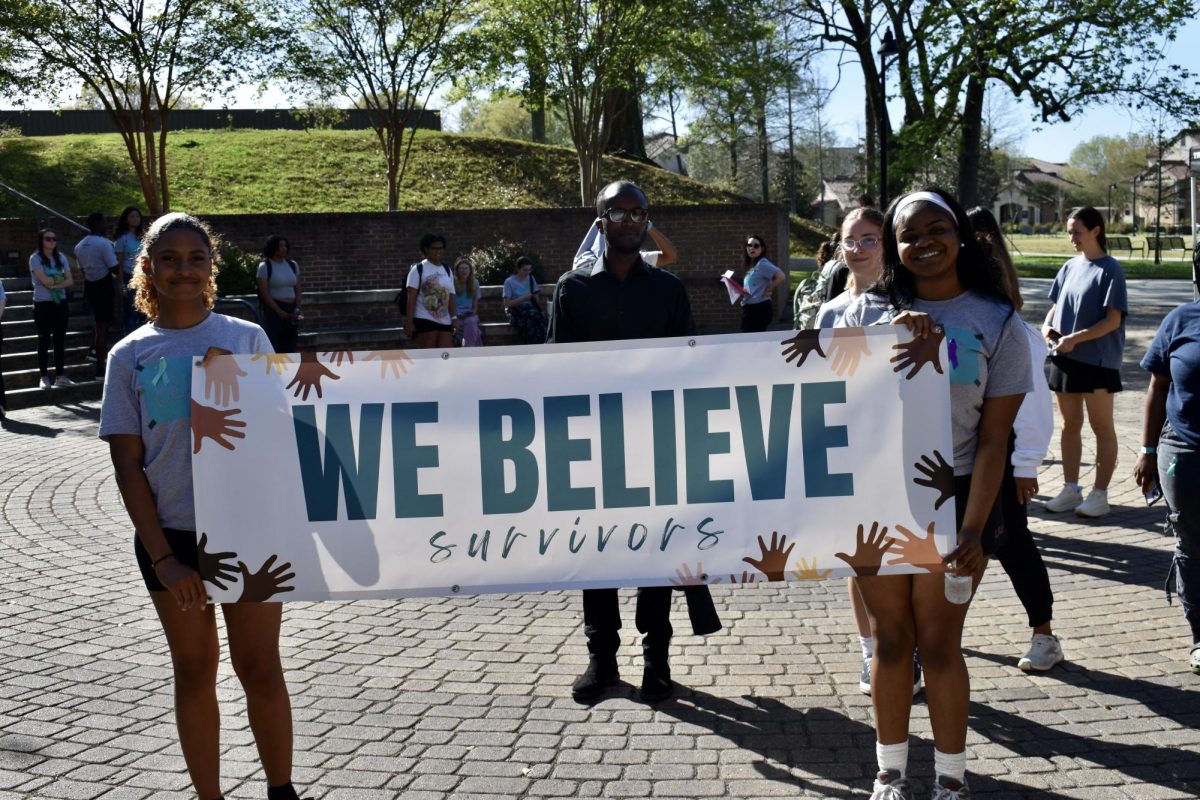
LSU’s Lighthouse Program started off the month with its Believe March on April 7 at the Parade Ground.
This event brings students, faculty, staff and community partners together to participate in a silent march to focus on sexual assault awareness.
“It sends the message to survivors: ‘I believe you. I believe this happened to you, and it’s not your fault,” Walton said.
Walton emphasized the work it takes from a spectrum of people to make sure students have access to both prevention education and support services and resources for survivors.
On the same day, the Division of Engagement, Civil Rights and Title IX hosted the Sexual Assault Awareness Month Kickoff on Tower Drive.
During this event, various campus departments, student organizations and community organizations set up resource tables and shared how the campus can work together to end sexual violence.
These events also include efforts from LSUPD, which plays an active role in sexual assault prevention by combining education and partnerships to create more visibility.
Marlon Hawkins, LSUPD Community Outreach Sergeant, explained that LSUPD conducts community policing presentations, teaches self-defense classes and connects students with critical support.

LSUPD is also involved in the criminal aspect of sexual assault, making sure that sexual assault cases are handled with care and privacy.
Hawkins said all sexual violence cases are investigated by LSUPD’s Criminal Investigation Division, which has the proper training to conduct thorough investigations through trauma-informed response techniques.
“While all crimes are taken seriously, sexual assault cases involve additional privacy protections, specialized investigators and protocols, close coordination with Title IX and advocacy services and a victim-centered approach that helps get the best outcome,” Hawkins said.
Campus organizations, such as Tigers Against Sexual Assault, use April as a way to promote their organization’s mission alongside campus partners as well.
TASA hosts tabling and awareness events throughout the entire month, including their Denim Day initiative and “Perks of a Being a Wallflower” movie night.
These events provide LSU students with the opportunity to learn more about sexual assault, even if they are not survivors themselves.
Sophia Murray, a psychology junior and TASA’s vice president, said that knowing how to handle situations when survivors share their experience is very important to avoid stigmatizing sexual assault.
Murray said events hosted by TASA are, “not only trying to teach how to avoid bad situations where sexual assault could happen, but also knowing how to handle it if it does happen.”
There are many more events taking place on campus for students to get involved, including LSU’s Feminists in Action “Take Back the Night” on Thursday, starting at 6 p.m. on the LSU Parade Ground.
“Attending these events helps students learn how to support friends or their peers who may be impacted, identify resources to support them, understand consent and healthy relationships and contribute to building a safer and supportive campus culture,” Walton said.
A list of upcoming events for Sexual Assault Awareness Month can be found here.