



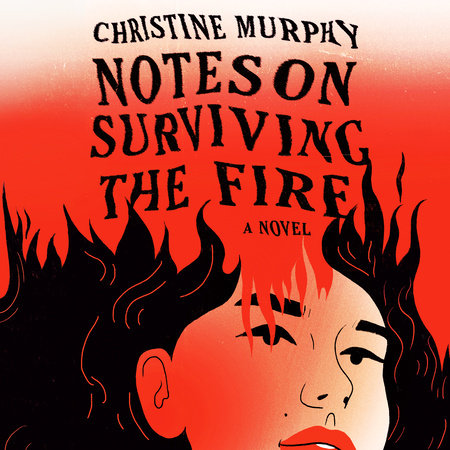
When I chose the first available audiobook that I spotted on my reading app, I didn’t expect it to become one of my highest-rated books of 2025. “Notes on Surviving the Fire” is Christine Murphy’s raw and introspective debut novel, and it hasn’t left my mind since I started it.
The novel opens in the mind of Sarah Commons as she reminisces on hunting as a child. Her experience as a hunter creates an undercurrent throughout the book: understanding the cost of preying on something else, while simultaneously being someone who was once preyed upon. This tension between predator and prey makes the book stand out among most thrillers, which tend to focus on one or the other.
Sarah is a broke PhD student in religious studies living in an affluent area. When her best — and only — friend Nathan dies of an apparent heroin overdose, she is determined to prove that his death was not self-inflicted. Her journey uncovers a larger story of rape culture, toxic academia and systemic corruption.
A rape survivor herself, Sarah begins to notice that a handful of students at the school who have recently died were reported for sexual assault. Left alone with her grief and growing obsession with discovering the truth, she finds herself closer than ever to her assaulter and the systems that perpetuate harm toward marginalized identities.
With more proximity than ever, should she finally exact her revenge? And what is she willing to sacrifice to uncover the truth?
Though the book is less than 300 pages, it feels twice as long. This isn’t because it drags, but because it is emotionally taxing to live inside Murphy’s world. Despite the payoff being well worth it, this isn’t a novel for those seeking escapism. Addiction, corruption and violence are at the core of every word, and Murphy approaches each unwaveringly.
Murphy never flinches from the effects of violence. Sarah’s narration displays the bleak reality of survival, coupled with the underlying thematic motifs that force us to approach the world cynically.
Her imagery borders on excessive; you can’t get through a chapter without the mention of SoCal smog during wildfire season, or the dismal energy of her bureaucratic college campus. It is almost claustrophobic to be in this setting that is this suffocating.
In the end, though, Murphy creates such claustrophobia intentionally and holds a mirror to the things we all go through. These are all human experiences that feel devastating, yet are not unique. Alongside Sarah, we witness the collectivism that forms through grief and pain.
Despite Sarah’s isolated and misanthropic view of the world, I felt drawn to her. I can’t name a single trait or habit that we share, yet Murphy makes her so sympathetic that it’s impossible to be ambivalent toward what happens to her.
A similar read to “Luckiest Girl Alive” by Jessica Knoll, this story is melancholic, biting and emotional. These two novels have defined a new era of feminist thrillers, which poses a response to the “Gone Girl” epidemic of girlboss-ified victimhood.
As a fan of campus thrillers, this story bent the genre on its head. Where the trope often makes college feel like a backdrop, “Notes on Surviving the Fire” displays the interconnected, complicit nature of American academia.
From the moment I picked up this novel to weeks after finishing it, I haven’t been able to stop thinking about it. The twist is truly cinematic in nature, echoing the genius of Agatha Christie.
Though much of the content would require reworking for film, I can easily see this story fitting into Letterboxd lists with the likes of “Promising Young Woman” and “Jennifer’s Body.” Though it was only published in February of this year, there’s a real chance it could be picked up by a studio.
In a time where thrillers are overly concerned with cyclical catharsis, quippy one-liners and cheap scares, Christine Murphy instead mediates on the pressing weight of trauma. She reminds us that women are people, not pawns, and that justice, when delivered, is seldom satisfying.


