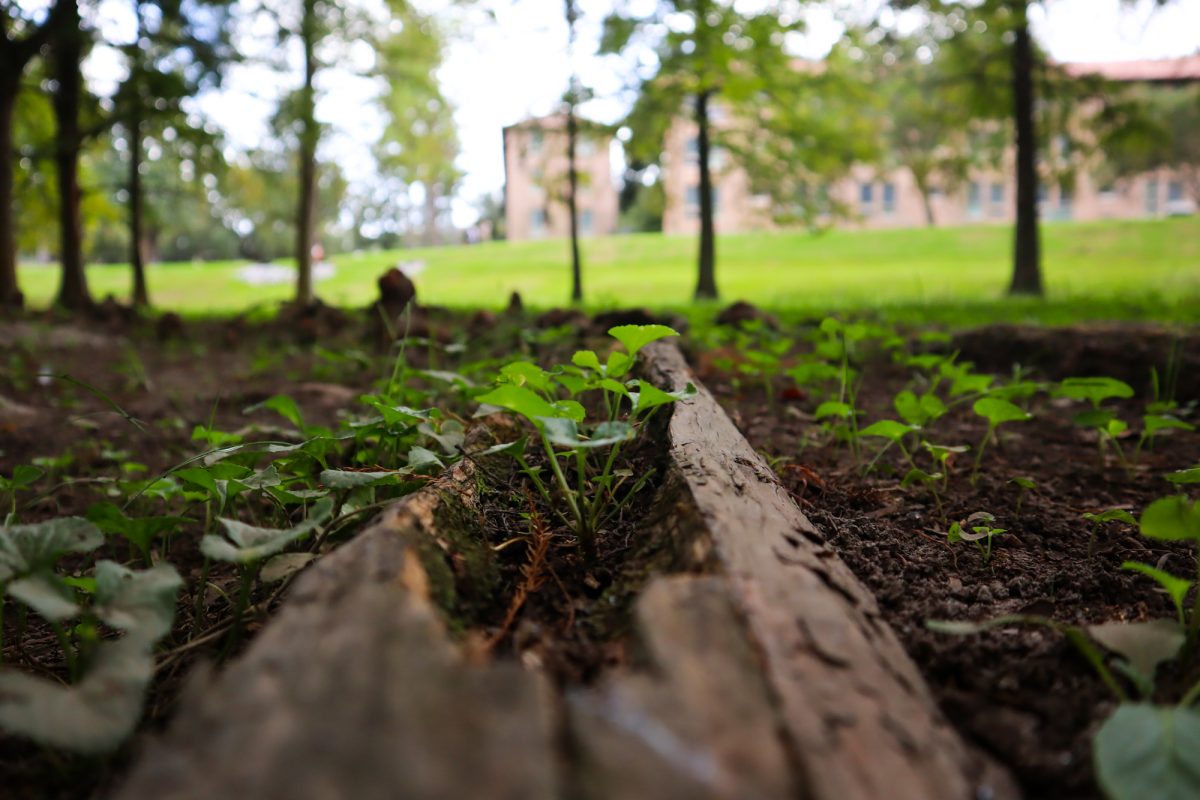
LSU students looking for hands-on experience with identifying plants in the wild can join the LSU Botany Club, an organization dedicated to observing plants in their natural setting.
When people think of agriculture, they often picture farms filled with crops or livestock. Although this is an important aspect of agriculture, it is not the whole picture. The LSU Botany Club instead focuses on undisturbed plant life and the conservation of these areas.
President of the Botany Club Brooke King, a sophomore natural resources ecology and management major, enjoys sharing her love for the Botany Club because it emphasizes the importance of nature as it exists — wild and free.

“The Botany Club is just studying the natural world instead of what we’ve manipulated to be our natural world,” King said. “When we think of plants or any wildlife in general, we think of what it can do for us. I think with botany, it’s what we can do for them.”
The organization tries to emphasize that areas overrun with shrubbery or plants are not a nuisance. They are simply a display of the beauty that comes from our natural world, which also serve as homes for wildlife in our area.
Students are invited to join LSU Botany Club members on their monthly hikes, which take place in the areas surrounding Baton Rouge. The group tries to keep the locations within an hour from campus, visiting popular hiking sites such as the Bluebonnet Swamp Nature Center, the Blackwater Conservation Area and Tunica Hills.
On these hikes, students can practice plant identification, a skill that can be used in everyday life.
“There’s this thing called ‘plant blindness,’” King stated. “We walk around every day not knowing the plants that we see around us.”
When people are able to combat plant blindness, they gain a new appreciation for the world around them. Even just walking around campus, students who learn about different plants can differentiate between trees, flowers and even vines as they walk from class to class.
With an appreciation of nature, people are more likely to understand why it is so important to protect nature reserves and ecology as a whole. They are also able to discern what is native and non-native, which can help prevent invasive species from further encroaching into the environment.
Another major aspect of the Botany Club is its art nights centering around creating art from or of nature. One of the past projects utilized an invasive species, the Chinese tallow tree, by taking it from the area it was invading and repurposing it for artwork that could be sold.
“We used Chinese tallow wood cookies to try to remove some of the invasives out and repurpose them for something beautiful and a way for us to make profit,” King said. “A very hard thing to do, especially in the ecology world, is doing the right thing ecologically wise while still making a profit.”

In addition to projects such as this one, the club teaches members how to properly press plants. Art nights feature many different activities, such as painting and resin encasing.
Students do not need to be in the LSU College of Agriculture, or even be a STEM major at all, to join the LSU Botany Club.
According to vice president of the LSU Botany Club and senior biology major Madeleine Hamlin, the only requirement for joining is an appreciation for nature.
“The Botany Club is really just a club for people who love nature, love the outdoors and specifically key that interest into plants,” Hamlin said. “We just have a fun community where we get together, hang out, talk about plants and go on some really cool hikes when we can.”
Soraya Brumfield Mejía, a senior psychology major, enjoys the community she has found in the organization even though she sometimes feels a little out of her depth when learning about different plants.
“Everybody’s very welcoming and very enthusiastic,” Mejía said. “They love plants and they love teaching people about plants and the things that they find cool about it, so I find that there’s not usually too much of an issue catching up.”
Going out of your comfort zone may not be easy, but it might just spark a new interest or bring new friends into your life that you would have never known otherwise.
“If it’s something that you haven’t really considered before, I think it’s worth giving a try,” Mejía explained. “You open your horizon a little bit.”
The LSU Botany Club meets at least once a month, focusing on identifying plants in nature, but also in the media. If you’re looking to join their organization, you can find them on TigerLink, or message them on Instagram.