LSU’s campus lighting is a hot topic in the community, with many students blaming the university for not doing enough to address its seemingly insufficient lighting levels.
But LSU Facilities weighed in on how it works to combat darkness and what plans it has to keep campus well-lit.
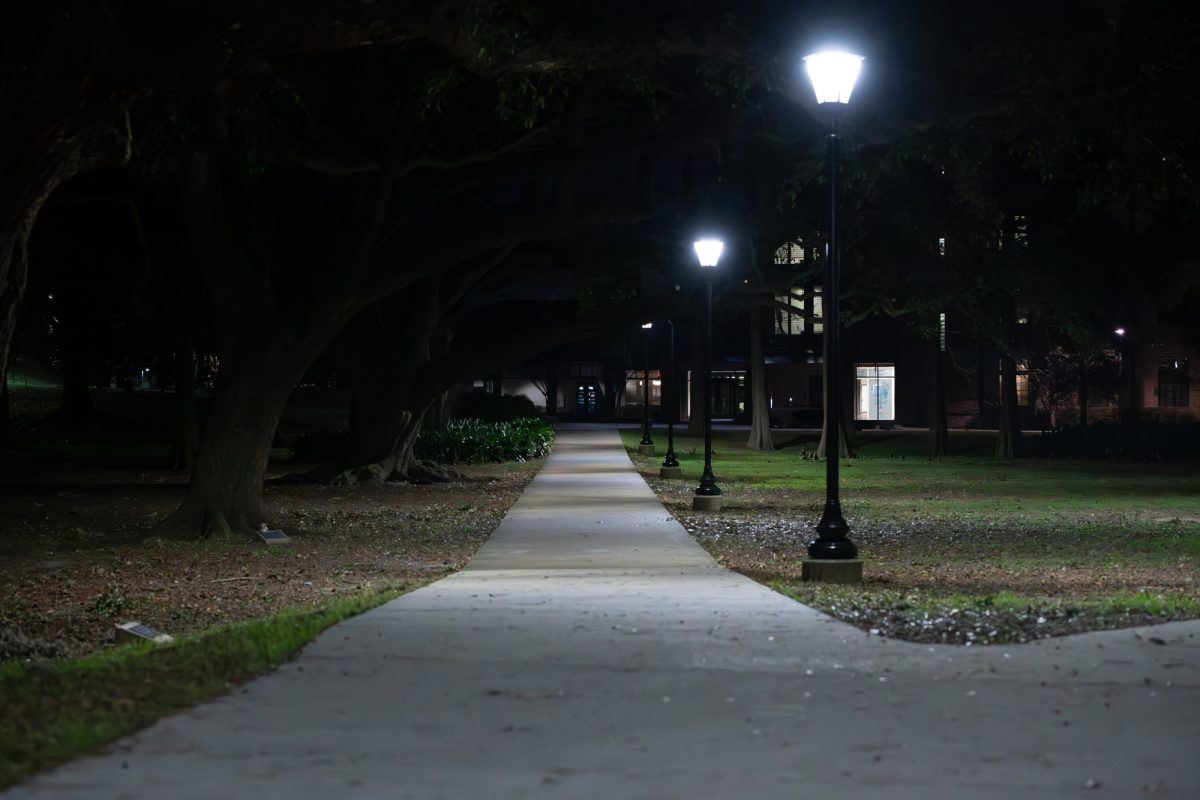
Students have voiced complaints about low lighting on several areas on campus, including the Enchanted Garden, Highland Road area and academic buildings near the Union.
Sophomore nursing major, Kennedy Wakefield, said her weekly walk to Salt Church on Highland Road includes very dimly lit areas of campus that she cannot avoid.
“I am always having to look over my back and stay focused when walking to and from church,” she said.
Amid these concerns, the directors of LSU Facilities shared their efforts to promote safety on and around campus.
“I would say that the safety of our students, faculty and staff is always a concern for us. So, we look at lighting all the time, year-round,” said Facilities Executive Director Tammy Milican.
With safety as a main concern, LSU Facilities has long been working to increase the quality of lighting on campus.
The lighting system took a successful turn when Facilities went through with a large-scale project in 2020, spending $4 million on lighting renovations. They hired a consultant to complete a lighting analysis to identify the approximate lighting levels on campus, focusing on pedestrian corridors, student parking lots, building entrances, the Quad and Parade Ground.
Facilities directors compared the findings to their lighting goals to identify areas that were lit properly, were deficient or that may have been overlit. Through their efforts, they created a new LSU standard for lighting.
This project brought many changes to campus, including intentional lighting around crosswalks.
“You’ll see we’ll have two lights on both sides of the crosswalk shining the way the traffic’s coming so they can see the person in the crosswalk. And that’s one of the things that got added about five years ago, and I think that’s really been a big plus for safety,” said Neal Pendleton, Director of Electrical Systems for LSU Facilities.
The project in 2020 brought relief to the community, as facilities noted fewer complaint calls coming in. But they recognize that work still has to be done to ensure that every area meets this new standard.
Facilities directors are using new technology to target these areas that may be lacking light, like thermographic aerial scans.
Upcoming projects include lighting up walkways near the LSU Parade Ground and installing new lighting for the renovations of the Library.
“Whenever we have major construction, it also gives us the ability to improve the lighting in an area. So with all of these efforts, it’s improving, whether that’s through new construction or lighting projects, all of that comes together to make the campus more well-lit and aesthetically planned,” Millican said.
Along with new construction projects, LSU Facilities is working to create consistency in lighting color and fixtures that maximize efficiency and sustainability.
Dennis Mitchell, Campus Landscape Architect, adds that this process helped Facilities learn what type of lighting works best for the campus.
“We are specific about how we design and specify light on campus. We’ve chosen a fixture that is a classic design that looks like it lasts forever,” Mitchell said. “What’s nice about that fixture is that you see the light, it’s not glaring and it’s not overbearing. It’s the right amount of light that puts the right amount of light on the ground.”
Millican also claimed that achieving consistency would help campus look better.
“By having a design standard that says all of our lighting is going to look this way, and it’s all the same, then it’s also about the aesthetic of the campus,” Millican said . “Developing those design standards ensures that the campus is going to be looking better and better.”
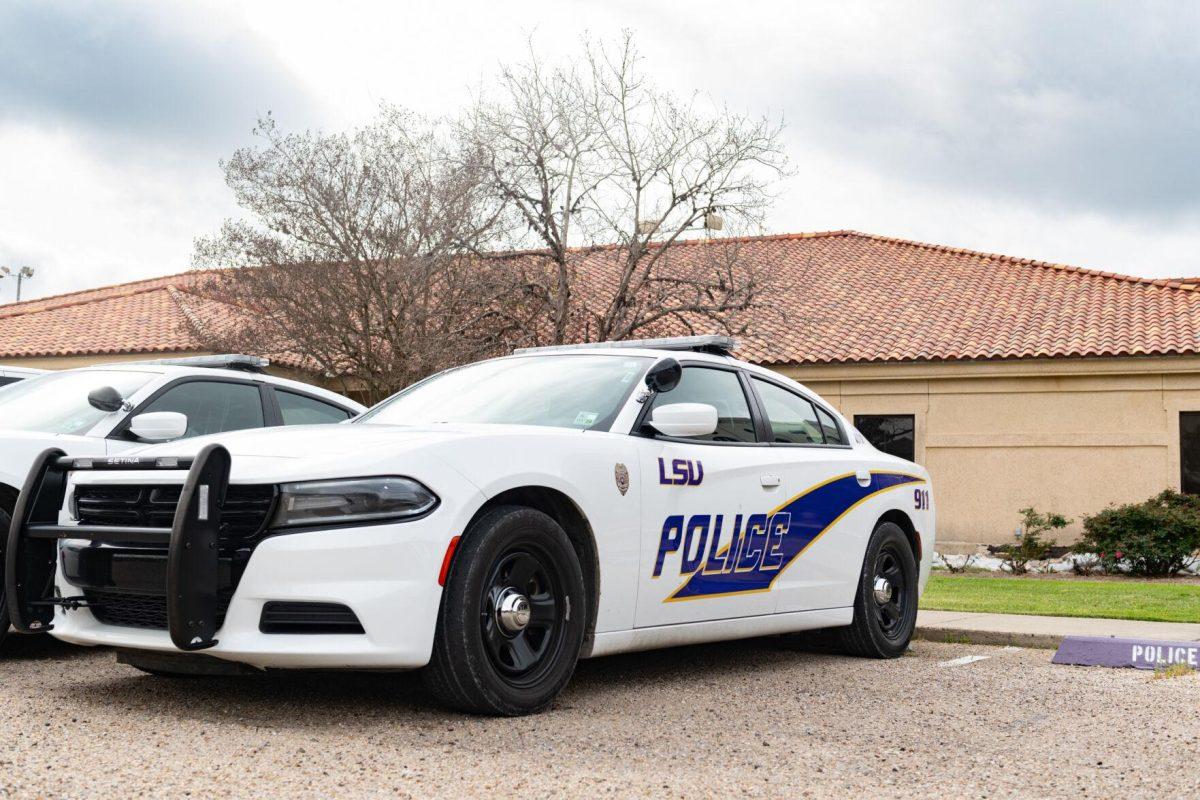
LSU Facilities is not the only organization working to make LSU brighter. LSU’s Student Government puts on an annual lighting walk, where students come out and walk around campus at night, taking note of what areas need assistance from Facilities. LSUPD also works very closely with Facility Services to keep lights on in areas prone to crime and to make sure vegetation stays out of security camera view.
Although LSU Facilities and other groups have made a considerable effort to keep campus lit, the community still expresses concerns about darkness. Many blame the lack of lighting on campus for rising crime rates, but crime reports provided by LSUPD suggest that these accusations are unfounded.
According to the LSU Security and Fire Report, crimes like robbery and burglary on campus are down from 2022, with 65 burglary and robbery events combined occurring in 2022 compared to only 47 in 2024.
LSUPD’s findings indicate that LSU Facilities’ efforts may have been successful in deterring certain crimes on campus. But Facilities directors would like to remind the LSU community that lighting is not an easy fix to lowering crime rates on campus.
“Lighting is one tool to combat crime, but it’s just one tool,” Mitchell said.
As LSU Facilities attempts to combat darkness on campus, they ask for the help of the community to report areas of their concern. Whether it be a broken light or an area that stays dark, they want to hear the community’s feedback.
“There’s nothing better than having a parent reach out and say, ‘I’m worried about this. Can you look into it?’ There are countless examples of that happening, and we’ll follow up and check into it,” Mitchell said.
The LSU Facilities Center has an active customer service center that takes concerns, by phone (255-578-3186) or email ([email protected]), seven days a week until 11 p.m. Facilities directors encourage the community to use their resources to their advantage and let them know what areas of campus need assistance.
“If there is an area of concern, the best thing that they can do is not to just talk about it, but to call someone, so that we can go out there and take a look at it and get it addressed,” Millican said. “That’s the only way you’re going to see change, is to report it to us.”