Freedom for our forefathers and parents looked very different than what it looks like for children now. Our parents would run outside with their bikes and scooters and spend the day exploring their street or their neighborhood with nary a parental figure in sight.
They spoke about test scores, their favorite things at the time, music, movies and if they could come play outside tomorrow. Children were told to go outside because parents were tired of hearing the ruckus inside.
Parenting styles were relaxed when you knew who was who in the cul-de-sac and everyone lived by the code of getting to know your neighbors and borrowing sugar.
Kids now are faced with something much darker. The neighborhoods are quiet. You now have to fully wonder if there are even children on your street because you never hear them outside anymore.
What was once, “Get home before the street lights come on,” has become “Get off the phone and go outside.”
Parenting styles are more restrictive with allowing their children free rein. A friend your child met in your neighborhood and their parents now have to be thoroughly background checked before which generation can ever see them again.
I am not advocating for your child having the best childhood. Members of each will say that theirs was the best, and there’s no point in putting a chasm between generations with an already rickety, nostalgia-deprived, unyielding bridge between each other.
I want to know how we got here.
The more relaxed parenting styles of the early days found themselves to be safety hazards for children later on. During the 1980s in the U.S., after a number of abductions of children and the sweeping public awareness campaign of dairy companies printing children’s faces on milk cartons, the policy soon became: if you aren’t watching your child, then you are a negligent parent.
In the 1980s, Ronald Reagan and Reaganomics were brought to the forefront of American culture. The upper class and big businesses saw fewer taxes, and working class families saw the wealth gap grow. These families then had to turn from play and focus on more academic achievement for their children to find a way out of poverty.
Schoolwork then became the primary focus for children being pressured to be successful. Children mimicked their parent’s relentless work ethic.
When the No Child Left Behind Act was implemented in 2002, this experience was only further reaffirmed.
School systems and educators were pushed to focus more on standardized test scores. The school year was elongated by several weeks. More schoolwork and homework was given out. And as a result, children had less time to play.
All of these factors have played a part in squeezing the intrigue out of young people and making freedom not something that they look for but something convenient.
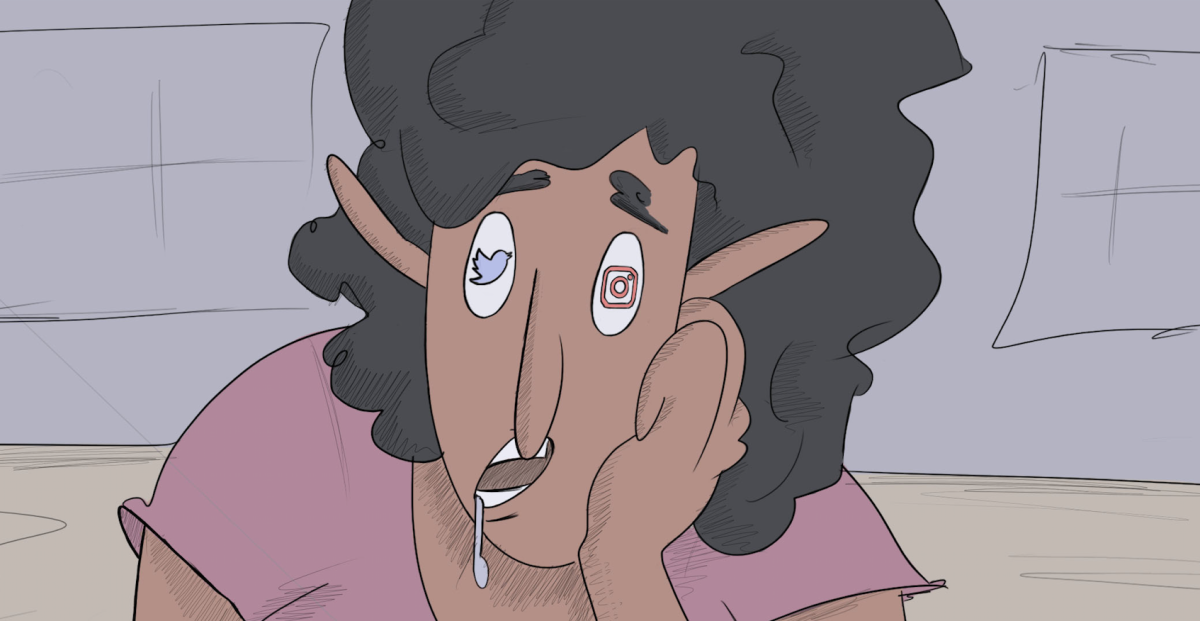
With the integration of the internet into every aspect of our lives, we have seen online communities find their way into the spotlight. Social media apps are how most young people communicate with their friends, family and even their future employers.
The human brain was built for in-person interaction. Miscommunications and misfires happen much more often than you’d think, and echo chambers block out any form of differing opinion or stance on any topic that is not the exact one that you have.
That’s not how the real world works.
Most importantly for the development of children, the rampant social media usage comes with the possibilities of your shortcomings or embarrassing moments being remembered by not only you and your peers but also strangers on the internet forever.
It’s already affecting how adults show up to public spaces. They don’t fully enjoy themselves because they could be recorded and posted online at any moment. This behavior is also encouraged online, with most users not seeing an issue with a population of people scared to be themselves for fear of ridicule.
When you turn off your phone, there are supposed to be other activities that you can partake in to fully unplug and ground yourself with reality. Today’s kids aren’t fully granted that luxury; their third spaces are turning into other apps on their phones.
Third spaces are losing funding left and right. Parks, libraries, movie theaters, cafés and general places where people can just be people and commune or just relax are losing their place in society, and locations for these places are either too expensive or just hard to find.
However, there is hope.
In more recent developments, neighborhoods have started to make streets more play-friendly for children, while the CDC and SHAPE America have seen the effects that a lack of recess can have on younger children and have started to implement policies nationally for mandatory daily recess time K-12.
Changes are being made to find alternatives to being fully online and isolated, and these beliefs and values are being placed in the home with parents monitoring kids’ activities online and putting more emphasis on outside and school activities.
All is not lost for the younger generations, so take part in these changes and block out the internet for a few minutes.
Michaiah Stephens is a 22-year-old English major from Durham, N.C.