Since 1936, seven live tigers have called LSU’s campus home. From Mike I to current mascot Mike VII, each tiger has served as a live representation of LSU’s pride and spirit.
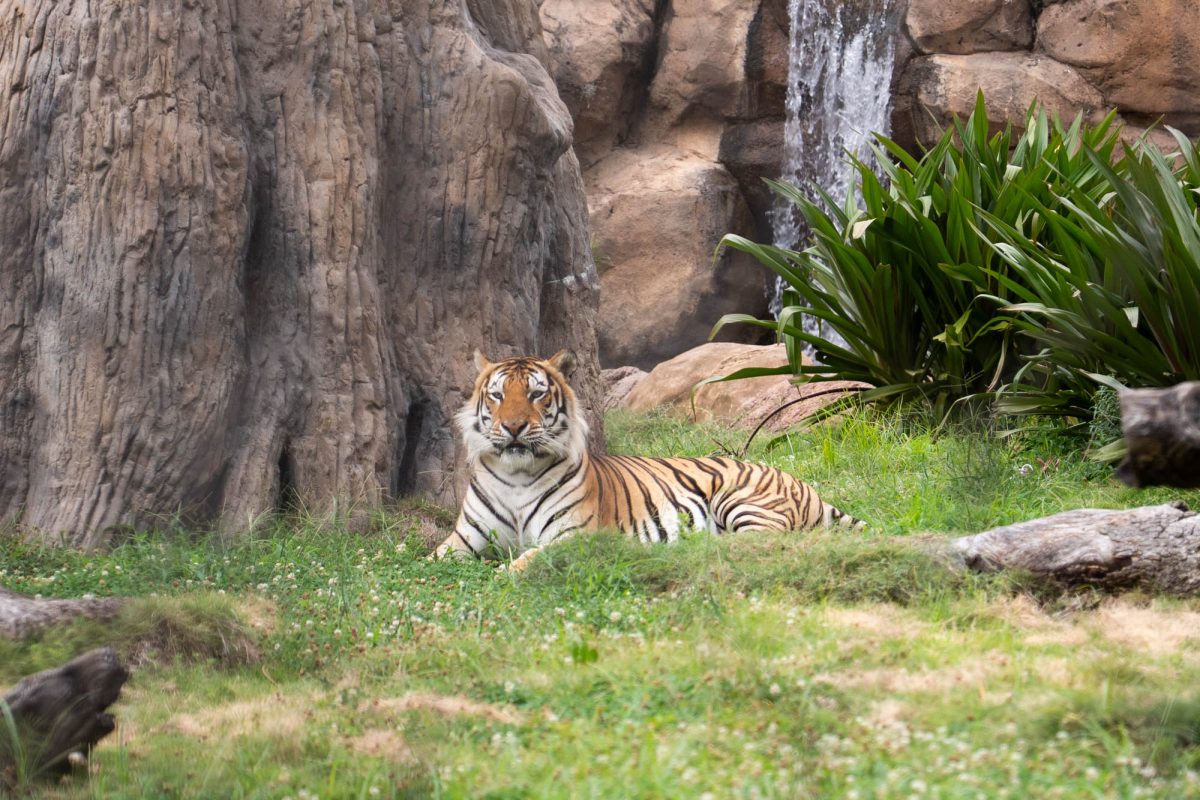
To ensure that Mike VII’s life on campus is one of comfort, his enclosure encompasses 14,010 square feet of outdoor space and a 1,000-square-foot nighthouse. Construction on this space was completed in 2005, and it has received many refurbishments over the years
In this space, Mike has two pools, a stream, grass, trees and foliage at his disposal. Ginger Guttner, spokesperson for Mike VII and assistant director of communications for LSU Veterinary Medicine, said that Mike’s favorite way to spend his time is in the pool, no matter the weather. He also enjoys walking around the perimeter of the enclosure and climbing on the rocks.
On top of a complete space to roam during the day and sleep at night, Mike also has access to his own veterinarian, Dr. Rhett Stout with LSU’s School of Veterinary Medicine, and two daily caretakers who are students in LSU Vet Med.
The daily caretaker positions are paid and highly valued among the veterinary community because of the time commitments made to provide Mike with the best care. Caretakers are chosen every other year from a pool of second-year veterinary students who apply for the position with their chosen partner.
The position requires two months of training every day, then caretakers work seven days a week for the two years they spend with Mike.
The caretakers tend to do most of the daily tasks that keep things running smoothly, including waking Mike up for the day. They also ensure his enclosure is safe the day before he is let outside, and they even put out different scents using essential oils so he has something to hunt.
Mike and the caretakers’ routine looks the same day to day, Guttner explained.
“Mike VII walks around, checks out his space, gets in the pool and then he sleeps for much of the day,” she said. “While he’s out, the caretakers clean the night house and get things ready for the rest of the day.”
This includes moving frozen food over to the refrigerator, taking an inventory of supplies and completing various other tasks. Although living in captivity, Mike VII and previous tigers on campus have received high levels of care that keep them happy and healthy. According to Guttner, tigers in the wild live an average of eight to 12 years, but in captivity, the average increases to 14.
“In addition to the habitat, his veterinarian and his caretakers, Mike has all of the resources of LSU Vet Med at his disposal, so he gets the best daily and medical care possible,” said Guttner.
Even with previous mascots being diagnosed with cancer — like Mike VI — and other chronic illnesses, Guttner added that LSU has continued to provide an exceptional level of care.
“LSU is dedicated to providing a good home for a tiger that needs one, and I think that Mike VI’s cancer diagnosis and treatment are a testament to the level of care that LSU provides for its tigers,” said Guttner. “No tiger in captivity had ever been given radiation treatment for cancer in the world, as far as we could tell.”
But many others besides those who work with Mike directly are proud to have him on campus. Students and community members alike visit Mike regularly, as a source of campus entertainment and even good luck on game days.
As LSU is one of only 58 universities that have a live mascot, LSU parent Jill Thomas explained that Mike the Tiger is arguably one of the most famous and recognizable live college mascots.
“He is a living symbol of LSU’s spirit, traditions and strength,” said Thomas. “Visiting Mike, in his habitat, is a reminder of [the] impact one student, who is supported and loved by many, could have on the world.”
It is easy to keep up with Mike VII on multiple social media platforms — Instagram, Facebook and X — or visit him in person at his enclosure nestled between the PMAC and Tiger Stadium.