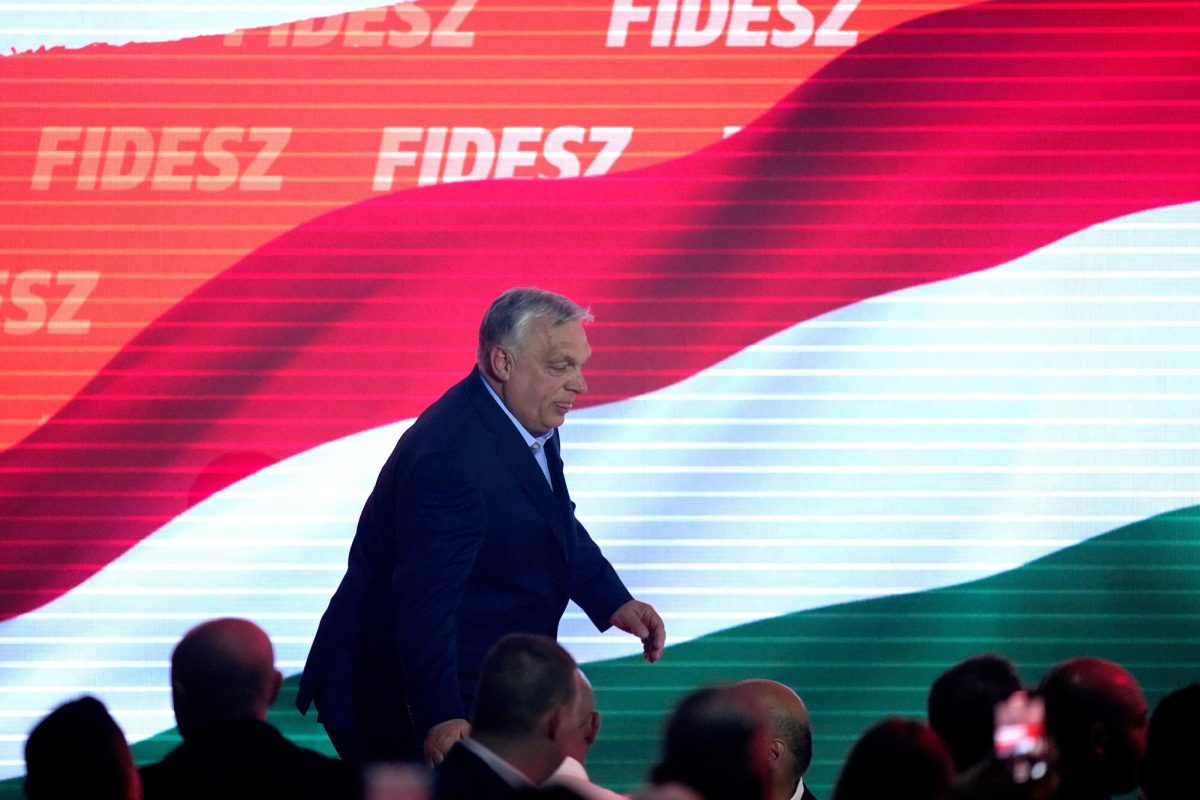
This month, one of the most globally-watched and regionally-significant elections in the world took place in a corner of the EU many have heard of, but may have difficulty placing on a map: the Republic of Hungary.
The election pitted incumbent Prime Minister Viktor Orbán, who has ruled the nation at the head of a far-right Christian nationalist government for 16 years, against Péter Magyar, a former member of Orbán’s party turned rapidly rising opposition leader following a years-long media campaign against corruption in the nation.
The result was truly monumental. Orbán was swept out, his government utterly demolished as Magyar’s party went from zero seats to a 137-seat supermajority in the National Assembly.
Many have hailed this result as a significant blow to the global far right due to Orbán’s close ties to both Russian President Vladimir Putin and U.S. President Donald Trump. Vice President JD Vance even rallied with Orbán in the lead-up to the election.
But why should you care about what goes on in this faraway nation?
Well, Hungarian politics have had reverberations across global politics for years now. This switch in power is likely to have significant ramifications.
The most significant impact is this: Russia just lost its number one cheerleader in the EU. Due to unanimity rules, Orbán has been the one big roadblock in the flow of EU aid to Ukraine for years, and with Orbán out, that opens up a number of possibilities: renewed loan packages, eased flow of arms and even potential EU enlargement.
A more unified EU foreign policy could also potentially strengthen the bloc as it squares up with an increasingly hostile American administration. Trump’s late decision to dive headfirst into backing the Orbán campaign leaves him with egg on his face, and the EU could very well take firmer policy positions against the U.S., emboldened by that public rebuke.
Plenty of Americans have also looked toward this election as a sign of hope: that people like Orbán, like Trump, can actually be defeated.
The similarities between the two governments are fairly obvious. Both figures rode in on a wave of anti-establishment populism, retreated toward authoritarianism and have struggled with regular allegations and outright exposures of corruption.
However, I would also caution against reading too excessively between the lines here. The gravity of this victory was largely driven by specific, catastrophic scandals, like the Zebra fiasco, wherein an estate tied to Orbán’s family was found to have a menagerie of exotic animals. It was also driven by over a decade of voter fatigue and Magyar’s personal charisma. Another significant difference between Hungarian politics and our own: there has been no truly significant “left-wing” opposition in Hungary since the mid-2000s.
However, it does present a solid model that Democrats can build on. Magyar focused almost entirely on classic “kitchen table” issues: rising healthcare and food costs, pensions and taxes. He combined this with an all-out social media campaign, an almost entirely uncontested realm due to Orbán’s overreliance on traditional media, where he presented a bold, concise policy plan early in the campaign and stuck to selling that agenda.
There are significant risks to going all in on a campaign which focuses solely on economics and remains pragmatic otherwise. By failing to take a strong stance on significant social policies, far-right rabble-rousers like Orbán and Trump are allowed to dominate the narrative and define the terms of debate before engagement.
I see Magyar with the same mix of slight optimism and immense skepticism that I see the big “anti-Trump warrior” centrist liberals like Gavin Newsom or Cory Booker. Technocratic agendas are purely Band-Aids for a larger problem, and if you don’t actively engage and dismantle the far right by actively defending the vulnerable, they will inevitably be used as kindling for the next nationalist flareup.
Take heed, America. Hungary shows the cracks in the foundation, but the next Democratic leader needs to pack some dynamite if they want to truly tackle the far right in this country.
Gordon Crawford is a 20-year-old political science major from Gonzales, La.