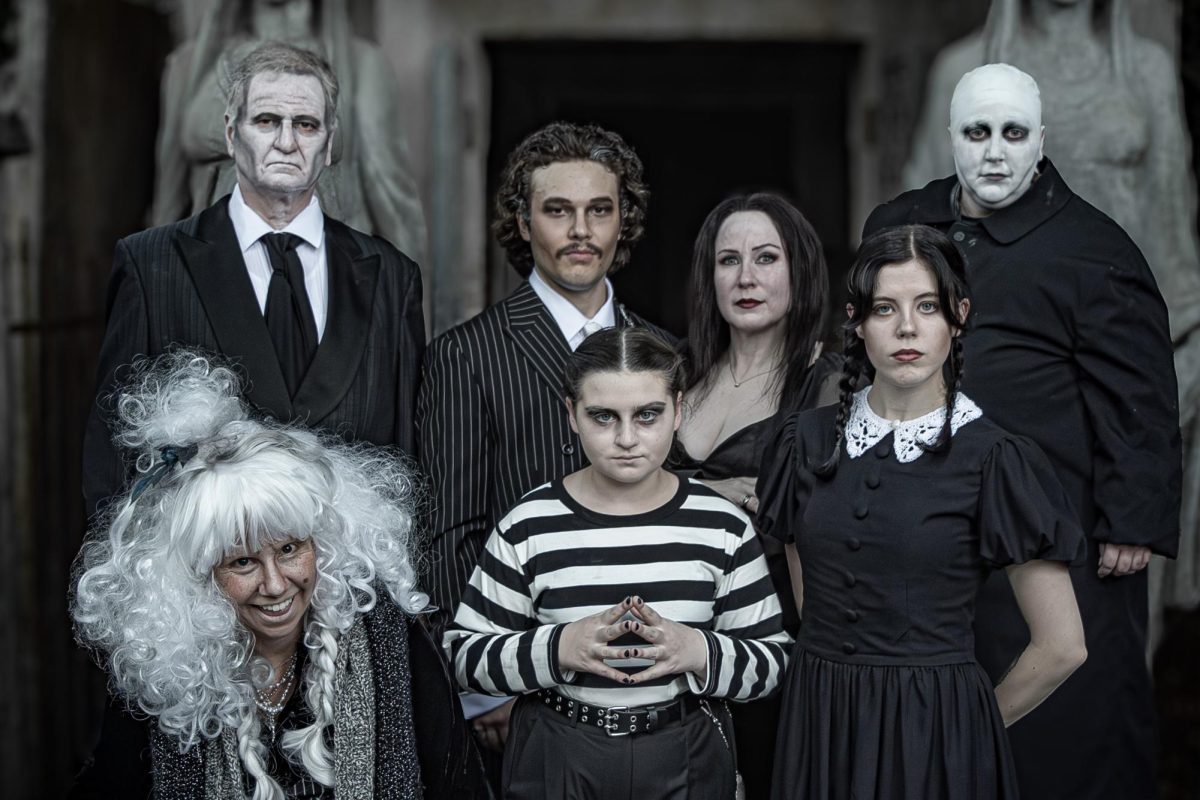
The month of October is always a great time to enjoy the spooky, morbid or supernatural, and if there is anything about Louisiana, this state loves vampires. From Louisiana folklore on the subject to the many books and films, there is a wealth of vampiric qualities to the state.
Luckily for the vampire fans at LSU, a rather unknown collection belongs to the LSU library. Nestled in the shelves of Hill Memorial Library is a collection of works about vampires that any fan of the gothic and deadly would dream of having.
Hill Memorial Library’s Special Collections holds all kinds of old and rare books, manuscripts, artworks and historical documents. There are over 120,000 books in their possession. People all over the world come to LSU to look at the diaries, literature and history housed in those walls.
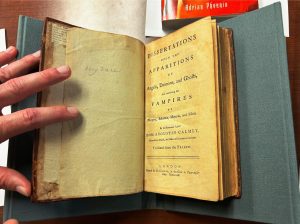
The collection contains over 300 vampiric works, some hundreds of years old. One of the oldest is titled “Dissertations upon the Apparitions of Angels, Demons and Ghosts, and concerning the Vampires of Hungary, Bohemia, Moravia and Silefia.”
Written by a Benedictine monk from France in the 18th century, the book is a peek into a world that truly believed in the threat of demons and vampires. In the book, Augustin Calmet writes about the apparition of these creatures and what it meant for people at the time.
The next major book in the collection is known as the first-ever vampire novel. “The Vampyre” has an interesting history. John Miles, book curator and head of instruction at the LSU Special Collections, mentioned some believed author Mary Shelley had possibly written it.
For the unwitting person, the authors of “Frankenstein” and “The Vampyre” may seem wildly disconnected, yet the origin of both stories is what connects them. In 1815, a volcano erupted and created what is known as the “Year Without a Summer” due to the enormous ash cloud. The volcano’s residue had slowly crept through earth’s atmosphere, spreading darkness and cooling the earth.
One night during this seemingly eternal winter, some of the world’s most well-known romantic poets came together and created art that would be remembered for centuries. Lord Byron gave his friends John Polidori, Mary Shelley and Percy Shelley a challenge. Each person was to write a ghost story of their own to shock the senses of their fellow guests.
Mary Shelley, at only 18 years old, wrote “Frankenstein,” and Polidori wrote “The Vampyre.” The LSU Special Collections library has an early copy from 1918, which is considered to be rare. Miles pointed out that the library’s copy has a special feature — in the back of the book, poems seemingly written by Polidori populate the back pages.
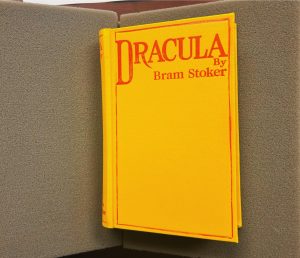
Polidori’s story inspired many other vampiric tales, but most famously, Bram Stoker’s “Dracula,” which the LSU Special Collection happens to have an original print of. Miles mentioned that the library received the copy a while back. He said the Special Collections staff had to replace the cover and completely rebind the book. In this process, they recreated exactly what the cover would have looked like.
“Dracula” is a title that everyone is aware of, but many may not know the actual story. The book is an Epistolary novel, which means the story is created through a collection of letters and diary entries written by the characters in the story. The plot follows Jonathan and Mina Harker, a betrothed couple. Jonathan writes to Mia as he encounters other worldly beings on a trip abroad, and Mina experiences the same monster as he tries to invade a quaint English town.
Miles said that Special Collections has quite a wide range of vampiric literature, from these genuine historical pieces of literature to more modern books that are seemingly all shaped by the former. Hill Memorial Library has copies of the beloved modern classic “Interview with The Vampire” in both English and French. Other books of Anne Rice’s are also littered about the collection as well, like an illustrated book about Claudia from “Interview with The Vampire.”
The collection also had multiple books related to the series “True Blood,” which is a vampire show set in Louisiana. There were also books on the grittier and more fantastical side of things like “The Fangover,” which follows rockstar vampires who end up having way too much to drink.
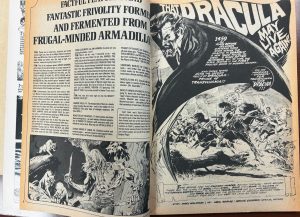
One of the stand outs of the collection are the “Dracula Lives!” comics. Miles said that these pieces are just comic books to the average person, but are actually pieces of great horror that were classified as magazines to skate around comic censorship laws at the time. These books are filled with mesmerizing and beautifully illustrated tales of the vampire Dracula.
It is a comfort to know that resting in the halls of LSU are hundreds of stories and moments from vampiric history, especially as Halloween approaches fast. Though seemingly insignificant in the wider scheme of things, preserving these stories not only keeps the memory of human art alive, but reminds the present of the minds of the past.