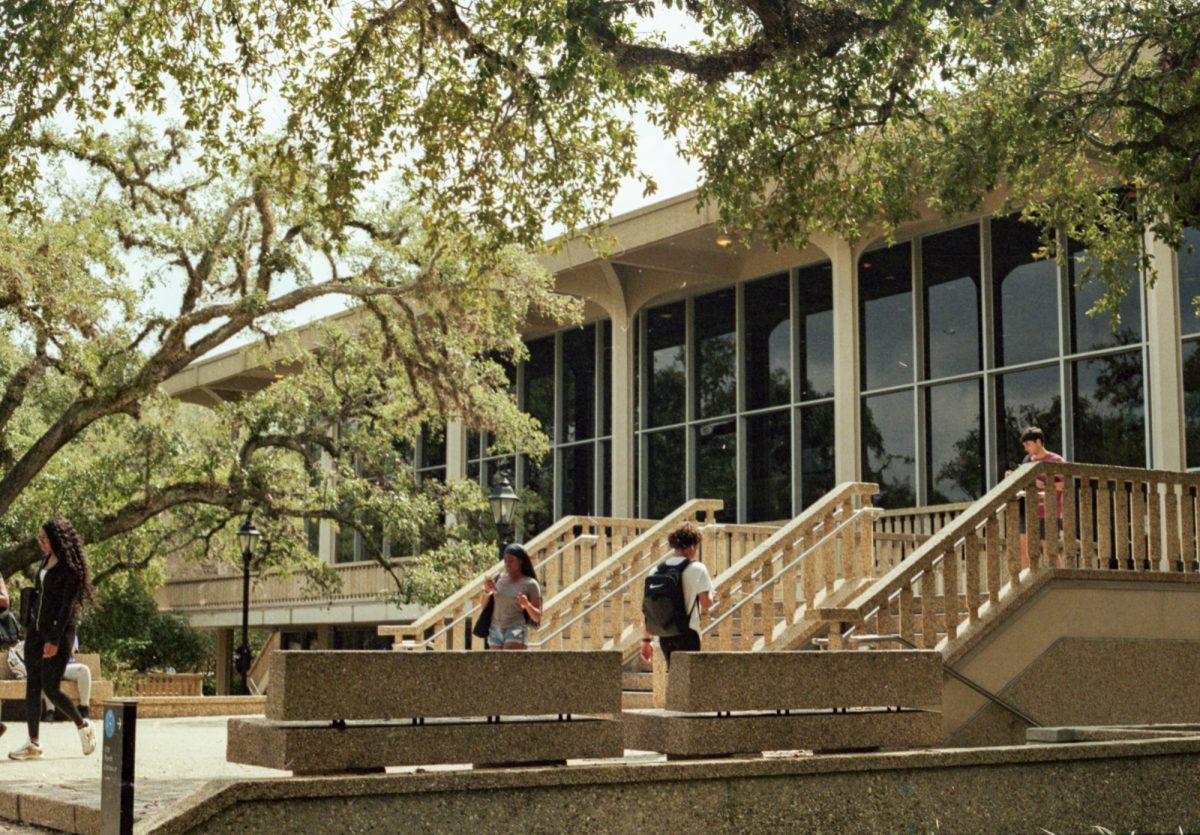
When the ribbon was cut to officially open LSU’s Student Union in 1964, a new era of campus life was born.
The Union became the go-to place to grab a bite to eat, meet with friends and, for many years, go bowling.
For decades, 16 lanes took up a chunk of the building’s ground floor. The alley opened to the public for just pennies a game. To many LSU alumni, it was a community staple.
“It wasn’t anything fancy, but a lot of fun,” 2001 graduate Janay Jones-Clark said.
So, whatever happened to the Union’s bowling alley? Why was it removed?
Past students said a remodel was long overdue. With a dated appearance and vintage technology, the 40-year-old alley was showing its age.
Shirley Plakidas, the Union director from 1967 to 2011, oversaw the bowling alley for most of her tenure, and its dwindling popularity forced her to make a tough decision. In 2007, the Union received an $83.7 million makeover, which saw the bowling alley replaced with the Live Oak Lounge, located today next to the Sonic and Einstein Bros. Bagels.
According to LSU Auxiliary Services, the first proposal for a student union on campus came from the Reveille in 1939. Construction wouldn’t begin until over 20 years later in 1961, when the Board of Supervisors decided to place it in the heart of campus — the Memorial Oak Grove.
Carl Maddox was the building’s first director and oversaw construction until the Union’s grand opening three years later. The building included a game room, later dubbed “Tiger Pause.” Located on the ground floor, the space was originally composed of 16 lanes of bowling, billiards and table tennis.
The bowling alley was at its prime in those early decades, but as time passed, entertainment for college students evolved.
Circa 1990, alumni such as Omar Medrano described it as dated and mostly deserted by students.
“Although LSU rocked in the ’90s, it’s a way better campus these days with all the upgrades,” Medrano said.
Plakidas said in an interview that one common issue with the alley was its upkeep, which proved difficult over the years.
“It took a lot of hard bumps and bruises, so it was very expensive to keep well-maintained,” Plakidas said.
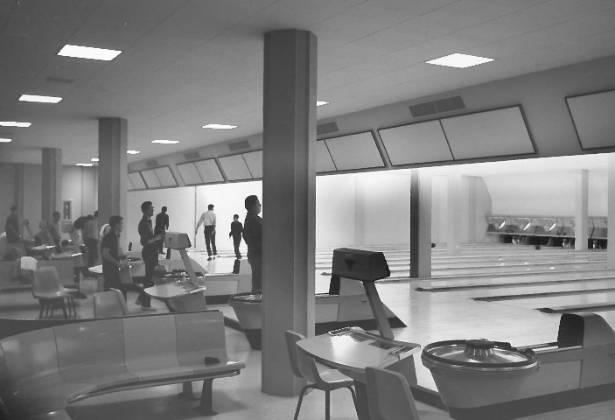
Despite the decline in recreational use, the alley still got plenty of love from elective classes.
Kinesiology 1130, better known among alumni as “bowling class,” was a physical education course that offered college credits. For many years at LSU, the Union’s bowling alley served as its classroom.
“That was an automatic way of developing new interest in bowling as a leisure sport, and that kept the interest up for a long time,” Plakidas said. “When they stopped offering that as a credit, then the attendance in the bowling lanes really dropped.”
After the UREC opened in 1992, the elective class was dropped from the course offerings somewhere in the late ‘90s or early 2000s.
“It offered so many more recreational opportunities for students who just wanted to stay fit,” Plakidas said. “It really helped the demise of the bowling alley.”
As the 2000s carried on, the bowling alley grew lonelier, and talks of renovation began among members of the Board of Supervisors. In the middle of a technology boom, bowling was not the popular pastime it once was, and it was time for a makeover.
Construction commenced all around the Union in 2006, with a special focus on the ground floor and specifically, the bowling alley.
Plakidas described the extent of the renovation in a Fall 2011 issue of the LSU Alumni Magazine. The many changes and expansions included the relocation of Free Speech Alley, which used to exist where the breezeway is between the main building and the theater. New meeting spaces and lounges were designed as a part of the new era of LSU’s Union.
One of those lounges would be built on the ground floor, which Plakidas said was “perhaps one of the most unique challenges.” The space was entirely reimagined as the Live Oak Lounge: “an airy, inviting space where students and visitors can relax, eat, watch any of several televisions or visit with friends” while admiring a view of LSU’s oaks from a glass wall looking out into the grove.
The main goal of the space’s transformation was to adapt the Union to the modern world, in which an increasing number of portable devices called for more easily accessible electrical outlets. Plakidas’ goal was to create a technology-friendly area for students to congregate.
“We tried to change with the times and provide not just the services but the utilities that students needed to keep up with their schoolwork,” Plakidas said.
Phase one was completed in the fall of 2009, and the bowling alley was officially gone forever — in theory.
Over 15 years after its removal, could a bowling alley on campus be possible once again? Past and present students are conflicted.
A common suggestion among alumni was to bring bowling to the UREC, where it could serve as another recreational activity for today’s students.
Others think it’s a dead hobby, and for it to be used enough long-term, there would need to be a bowling revival.
So, has bowling truly gone out of style? Some current students think not.
Daniel Brandenburg, a film and television major, was unaware of the existence of the long-gone bowling alley.
“I have thought about adding more entertainment opportunities for the students here, like a movie theater or something,” Brandenburg said. “I think that would be so much fun just to have more activities to do.”
Freshman Julia Simon agreed with her peer, saying it could add value to student life.
“I wish that they would bring it back,” Simon said. “It would be a great way for people from different groups to meet, mingle and make new friends.”