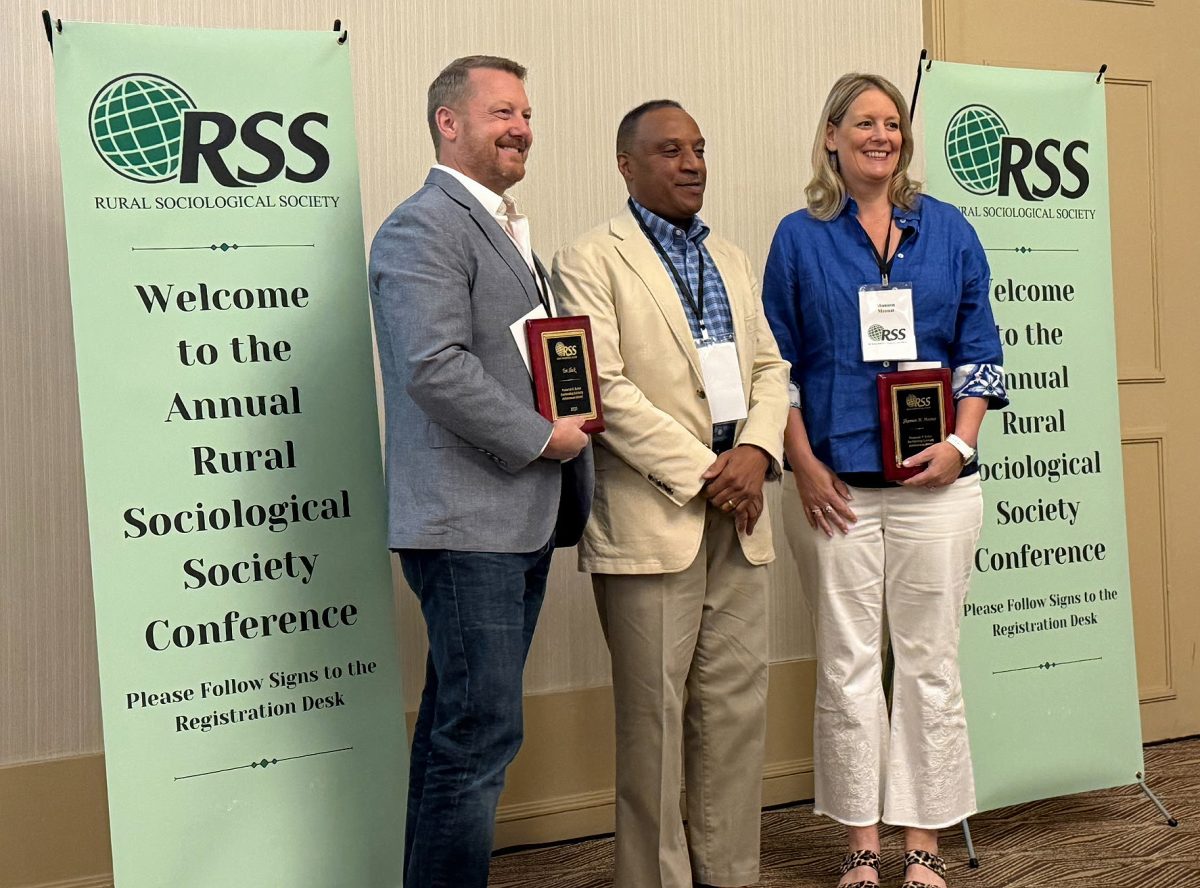
LSU sociology professor Tim Slack has been elected president of the Rural Sociological Society, a national organization that works to promote social science research and enhance the quality of rural life across America.
As a long-standing member and leader in the society, Slack’s research and professional development prompted his peers to elect him as president.
“It’s a really nice recognition because it suggests that people think that I have the capacity to help set a vision and a path for society and represent it in public venues, so that’s really an honor and privilege,” Slack said.
Slack’s research at LSU focuses on labor force issues, informal employment, population and environmental change, and the social impacts of disasters. Much of this work involves Louisiana communities and challenging common misconceptions about rural communities.
Slack explained the importance of understanding and applying research on the ground to create public policy that mitigates some of the problems rural Americans face and elevates opportunities in these areas.
“If we don’t know what the kind of contours and dynamics of issues are on the ground, we can’t really do that,” said Slack.
Slack plans on using his position as president of the Rural Sociological Society to expand the society’s reach beyond academic audiences and make stronger impacts within rural American communities.
Slack believes that one way the society can increase its impact on rural Americans is by involving more than just rural sociologists in research and projects. Slack explained that working with nonprofit organizations, government officials and other assisting agencies makes a larger impact when society is faced with community and economic development issues.
One way the Rural Sociological Society plans to impact non-academic audiences is by addressing misconceptions about rural communities and promoting fact-based perspectives.
“There’s just the misunderstandings about rural America run so deep,” Slack said. “We have a responsibility to elevate the knowledge that we have to help people sort through those misconceptions and get to a clearer, more fact-based position.”
Slack noted that one of the most prominent misconceptions that he has faced in his career is that rural communities are the same across all of the country. People often believe that agriculture is the sole reason rural areas exist, but Slack explained that this is simply not true in an article he wrote, published by The Conversation.
“Only about 5% of rural Americans are employed directly in agriculture; the flip side of that is [that] about 95% are doing other kinds of work,” Slack said. “So if we think about rural as being synonymous with farming, we’re missing the way that most rural Americans make a living.”
Slack’s election marked a significant moment for sociologists focused on challenging rural misunderstandings and advancing research to support the many diverse rural communities across America.