Many things come to mind when it comes to cafeteria food: frozen smiley fries, hot dogs that have been sitting in the fridge for a month or questionable chocolate milk.
The Louisiana Farm to School Program is trying to put an end to that.
Founded in 2017, the Louisiana Farm to School Program is supported by an agreement between the LSU AgCenter and the Louisiana Department of Education. With USDA funding, they are able to collaborate with students, teachers, farmers and more to provide resources for educational tools on nutrition and agriculture to promote eating fresh, local foods.
According to their 2024-2025 annual report, almost 93,000 students have been impacted by this program since 2021. Ninety-two percent of Louisiana parishes have participated in their Harvest of the Month program.
“The main thing is the impact on the children and understanding where our food comes from,” Executive Director Carl Motsenbocker said.
Farm to School has three different components.
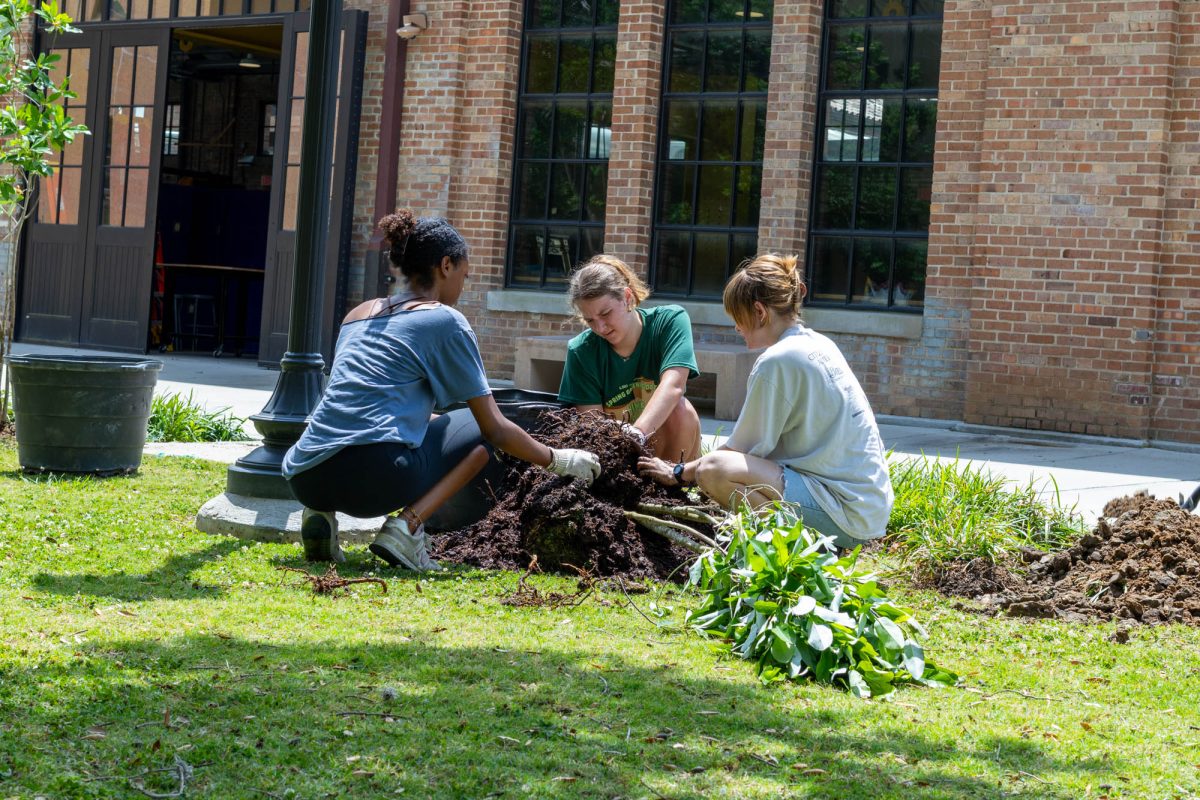
The first component is bringing local foods into schools. This is either into the cafeteria or into the classrooms for a taste test. The second is through gardening and growing, which allows students to see exactly where their strawberries or their broccoli come from. The third component is curriculum. This is done through lessons about nutrition and where their food grows.
All three components can also be seen through their Harvest of the Month program. Used in 59 of the 64 parishes in the past year, the program highlights a harvested good every month. The item would be found in the cafeteria, along with posters featuring recipes and a celebratory sticker if a student wanted to try one.
“If a child grows something in the garden, they’re 100% going to want to try what they grow,” Crystal Besse said.
Besse is the Louisiana Farm to School Program director and explained that as these students get more comfortable trying the food they are growing in their gardens or trying through Harvest of the Month, they are more likely to continue these healthy eating habits and take them home.
Some of these students might have never seen a strawberry with a green top on it, Besse said. It’s the magic of pulling a carrot out of the ground and getting to see exactly where their food is coming from that really accelerates this program. Not only that, but the more they’re in the garden, the more their screen time decreases.
Children need to try an item around six to eight times to like it, Motsenbocker said.
Teachers are able to access lesson plans through their Seeds to Success website, where they can also find numerous trainings that coincide with their year-long program, the Farm to School Institute. The program equips schools with the tools necessary to continue their Farm to School curriculum.
“Ninety-six percent of the parishes are doing Farm to School activities where they weren’t before our program was put in place,” Besse said, “and so we try to provide as much resources as we possibly can to make it easy for people because they already have so many obligations as a school, as a teacher or as a school food service person.”
Besse said there is no money put aside for the program, which means there is no money set aside for schools to purchase local food. Their funding is strictly for creating resources and bringing them into these schools.
Participation is voluntary, she said. Schools can elect to use their program with the understanding that it takes more money to buy local produce.
Motsenbocker said that they are the facilitators between schools and farmers. Their website has a guide on how to approach growers and vice versa. Their conferences, the next one being on Wednesday, facilitate networking opportunities for schools to meet the people they are going to be buying their local food from.
“It really takes dedication because there’s no funding for them, and our funding cannot be used to buy food,” Besse said.
Farm to School is a part of the extension side of LSU. Because LSU is a land-grant university, they receive funding from the federal government to do outreach, such as 4-H. Beyond helping schools, a major part of the program’s mission is educating the public as a whole.
Besse said that they take advantage of all of the research that happens at LSU, and with the support of the Department of Education, they are able to have extension agents in so many different parishes.
“We are a small team that is all based here in Baton Rouge, but we can spread ourselves wide because we have the extension service behind us too,” Besse said.
Registered dietitian and food and nutrition service director for the Diocese of Lafayette Celeste Finney said she has seen firsthand the positive changes in how students accept fruits and vegetables after being exposed to the Farm to School Program.
Finney was introduced to the program while she was the nutrition program coordinator for Lafayette Parish schools. One of the first things she said she noticed was the research indicating that this hands-on type of learning really has an impact on the students’ eating behaviors.
After already working with the Lafayette 4-H program, she partnered with the LSU AgCenter school garden initiative where she would go to classes to teach them how to garden.
“Where else is a child going to say, ‘Oh yeah, I can’t wait to eat some broccoli?” Finney said.
This excitement goes beyond the classroom when the students implement their new healthy eating habits in their grocery lists and at dinner with their families.
For more information on Farm to School, check out their website.