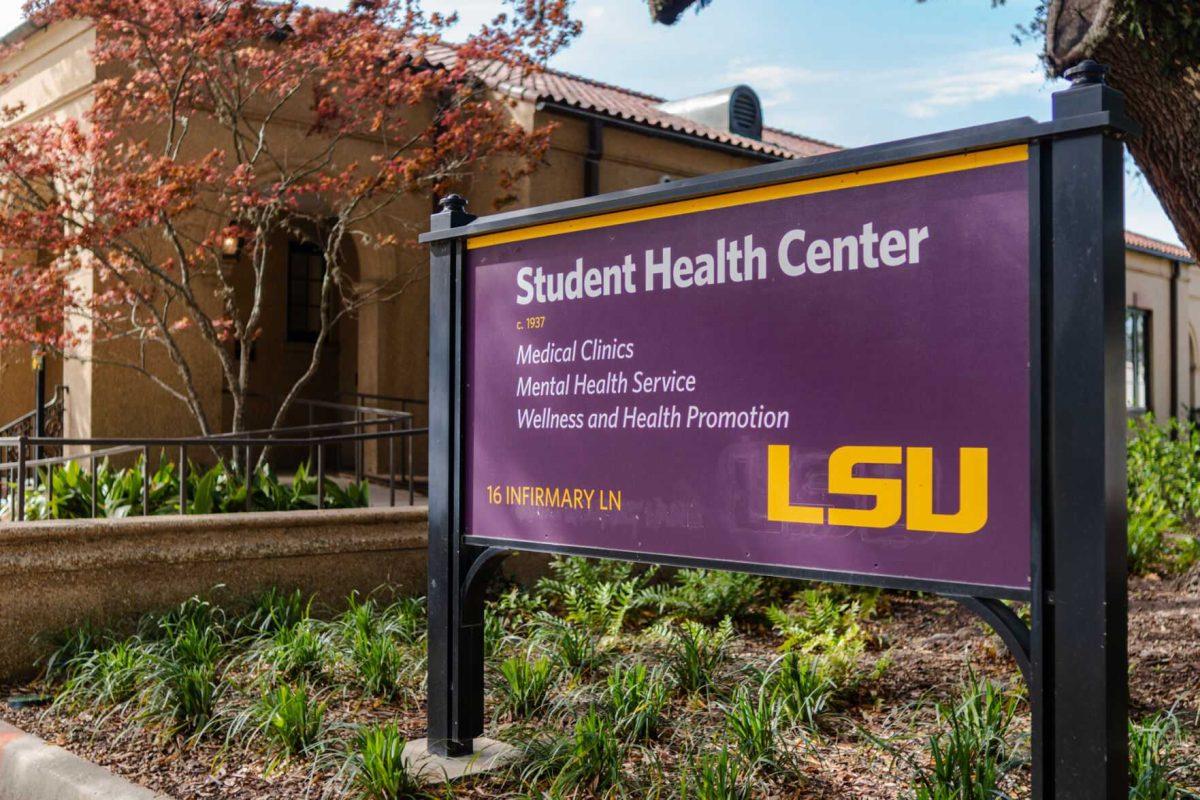
Each year, health providers across the country recognize April as Sexually Transmitted Infection Awareness Month. Because LSU is a hotspot for STIs, LSU Student Health Center professionals warn students that many cases go unnoticed and untreated.
Louisiana continues to rank among the highest in the country for sexually transmitted infections. Louisiana ranks No.1 in the nation for chlamydia and No.2 for gonorrhea, according to recent data. At LSU, providers say those trends are reflected on campus.
“Chlamydia is the most common that we probably treat,” said Callie Pitchford, a women’s health nurse practitioner at the LSU Student Health Center. Pitchford has been working at the health clinic for the past two years. “Most of them are asymptomatic… usually they’re caught by routine screens and not symptoms.”
Health professionals say one of the biggest challenges in reducing STI rates is that many infections show little to no symptoms, which allows them to spread rapidly.
“Chlamydia is the one that sneaks up on you,” said Carli DiLorenzo, the wellness coordinator who helps oversee sexual health outreach at LSU. “A lot of people don’t realize they have it.”
Some common symptoms of STIs that are often overlooked include burning during urination, abnormal discharge, swelling or irritation and bleeding between periods or after sexual intercourse.
Providers emphasize that since these symptoms are often absent, routine testing is critical.
“We’re definitely seeing more than one case a week,” Pitchford said. “A lot of infections are caught before symptoms ever show up.”
Rebecca Breaux has been a women’s health nurse practitioner since 1999 and has been working at the SHC since 2016. She said that students’ lack of awareness about how STIs spread puts them at risk.
Breaux recalled a case involving a student who had never engaged in sexual activity, but contracted genital herpes because the student’s roommate used their loofah.
According to Breaux, this case is a prime example of how easily infections can spread and why awareness matters: it demonstrates that some STIs can be transmitted to any place on the body.
She warned that sharing personal items such as towels, razors and drinks can increase the risk of contracting an infection.
Louisiana’s high STI rates are closely tied to the gaps of sex education. Breaux lamented that many students go to the Health Center and have no clue how STIs are transmitted.
DiLorenzo said that many students in the South receive abstinence-based or fear-based education. Leaving people without practical knowledge about prevention and testing.
Student attitudes towards testing also plays a huge role in receiving help.
“The biggest thing is the ‘it won’t happen to me’ mindset,” DiLorenzo said. “Not everyone in college is having sex… But if you think everyone is, you may feel pressure to engage in it — and not safely.”
Additionally, he observed that stigma surrounding STIs often prevents students from seeking treatment.
“I would love if someone could say, ‘Yeah, I had chlamydia last week,’ the same way they say they had COVID,” DiLorenzo said.
Untreated STIs can lead to lasting health issues. Health officials warn students to include STI testing in their monthly routines to prevent irreversible damage.
“It just takes one time of getting chlamydia, and it can make you sterile,” Breaux said
Some other complications besides infertility and sterilization include pelvic inflammatory disease, chronic pelvic pain and an increased risk of HIV.
LSU offers multiple options for students seeking testing and support. The Health Center tests for a variety of STIs in routine screenings, although certain exams must be requested outside of routine screenings.
Wellness-based testing is designed to be quick, accessible and often free. Services typically include rapid HIV testing using a finger prick, with results available in minutes.
At monthly testing events, students can also be screened for HIV, syphilis and hepatitis through the same finger-prick method, while chlamydia and gonorrhea testing is conducted through a urine sample.
“Upstairs in the clinic, it’s more of an exam, but in wellness it’s quick screening like finger pricks and urine tests,” DiLorenzo explained.
In comparison, testing in the SHC medical clinic is more comprehensive. Clinical testing involves a physical exam, including a cervical swab for chlamydia and gonorrhea, for more accurate results. Additional testing for infections such as syphilis and hepatitis is typically done through blood draws.
These services are usually billed through insurance, but students may choose to pay out-of-pocket for privacy. “If students want everything done through lab work, it can go through insurance, or they can choose to pay privately,” Pitchford said.
The next testing event will take place April 22, from 1 – 4 p.m. in the Women’s center. While HIV, syphilis and hepatitis testing are free, chlamydia and gonorrhea testing will cost $35 if not billed through insurance.
Students affected by sexual violence or in need of confidential care can also seek help through LSU’s Lighthouse Program, which works closely with the Student Health Center.
The program provides free and confidential services for survivors of sexual assault, domestic violence and harassment. The program can cover the STI treatment and testing fees and provide emotional support and housing accommodations.
As STI Awareness Month continues, LSU providers hope increased awareness will encourage students to take their health seriously.
“We’re not expecting to fix everything overnight,” DiLorenzo said. “But if we can start chipping away at the stigma and get more students comfortable with testing, that’s a big step forward.”