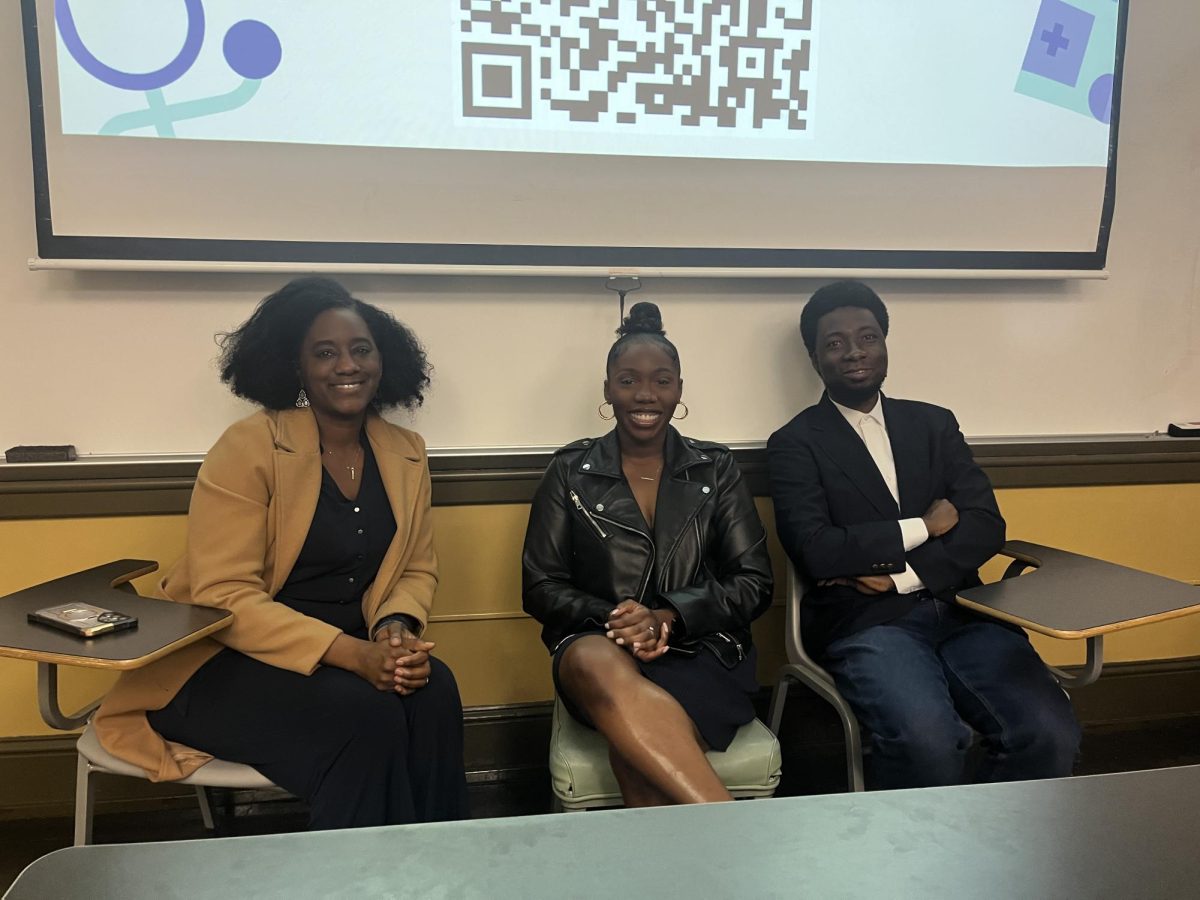
The LSU chapter of the National Council of Negro Women, collaborating with Black Girls Vote and Black Men in Medicine, hosted a Black Women’s Health and Justice panel.
On Tuesday evening, students had the opportunity to hear from three panelists about Black women’s health and the discrimination they face when receiving medical treatment.
One of the panelists, Latoya T. Paul, a professor of biology at LSU, has experienced discriminatory medical treatment several times throughout her five pregnancies.
When Paul was pregnant with her youngest child, she went to the emergency room for high blood pressure. Her concerns were disregarded for five hours before a doctor finally read her bloodwork and told her it came out clean, insinuating that he and his staff had assumed her medical concerns weren’t serious and that she was looking for a way to get drugs.
“It dawned on me that they didn’t care anything about me because they thought I was someone there looking for drugs,” Paul said.
Paul says she was stereotyped as a drug addict and denied adequate medical treatment because of her race. This is just one example of the discriminatory medical care Black women receive during pregnancy.
Ten years ago, Paul was experiencing symptoms of an iron deficiency — trouble sleeping, panic attacks and little to no appetite — and she was rapidly losing weight while pregnant. Doctors dismissed her concerns and told her that her iron levels were normal. However, when she went to a different hospital, she had her blood tested again and learned the truth: her iron was dangerously low.
The one thing Paul has learned from all this is to be wary of the medical advice given to her by doctors.
“You will be mistreated because of the color of your skin, because of historical biases, because of historical teachings that are embedded in our country,” Paul said.
Ifeyinwa F. Davis, an instructor of Women’s, Gender, and Sexuality Studies and African and African American Studies at LSU, said that the American medical system’s mistreatment of Black women undermines the “family values” it purports to uphold. Our country praises motherhood, but oftentimes Black mothers aren’t treated with care, respect or dignity at hospitals.
“Motherhood is supposed to be so beautiful, and women are supposed to enjoy their pregnancy,” Davis said, “But there’s a reality that what our society says they want for women… that does not apply to Black women.”
It’s important for Black students to understand these discriminatory practices so that they can be aware of the treatment they are receiving and help to advocate for proper care for Black women.
Jiselle Piper, the membership coordinator of the NCNW and an organizer of the panel, said that spreading information about these issues is one of the best ways to achieve social justice for Black people.
“We want to be able in the future to create initiatives to ensure that not only Black women but Black people overall are receiving that support and the necessary and proper care that they deserve,” Piper said.