Aidan Derby did not come to LSU with any interest in photography. Originally from New Orleans, he credits the city with giving him the artistic bone that set the stage for his journey.
Derby, 20, tried his hand at a major in music or art, but nothing ever quite stuck. However, in the spring of 2025, everything came falling into place.
At the time, he took a trip to Austin, Texas, with a handful of friends. One friend let him borrow her camera to snap a few photos for fun.
After returning home, Derby edited some of the photos and was surprised by the results. How professional these pictures turned out was his lightbulb moment that opened his eyes to the world of photography.
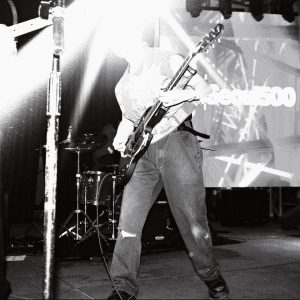
“When I got back, I started editing a lot of them, and I was having fun. I was like, ‘whoa, this looks high-quality, this is awesome.’ It was so bare-bones at the time, but it was just an aha moment,” Derby said.
Those same friends, part of the band NeoSeoul500, were competing in Battle of the Bands at Fred’s Bar a few weeks later. This was the first event that Derby officially photographed, and some people asked him how he got the photos to be so high quality.
His response? It was pretty simple.
“Dude, push and pull levers, press buttons, just figure out what you like,” Derby said. “That really is what got me going, is finding colors and styles that I liked. I got lucky that a lot of people also liked them. Trial and error, I guess.”
Derby subscribes to the art of not trying too hard.
When starting out, all he was using were some hand-me-down cameras and free editing softwares. He was not worried about the rules of photography or editing, only how he was feeling.
Being self-taught is an important aspect to the development of Derby’s style. Breaking so-called rules he never knew of in the first place led to many of the markers associated with his photography now.
For him, overexposure or blowing out highlights were not signs of a bad photo, but an accurate portrayal of his state of mind. He said that it is good to learn composition, but the most important lessons come from making something for yourself.
“If you’re going for a feeling in an image, there’s no rule to say, ‘this is how you get there,’” Derby said. “It’s really just up to you.”
Despite leaving music behind for photography, it still plays an important role in his art. A majority of his portfolio are concert photos.
When he is not on stage, Derby listens to a lot of shoegaze in the editing bay, which is a genre known for its ethereal and dreamlike quality. He attempts to translate how he imagines the music would look like in his edits.
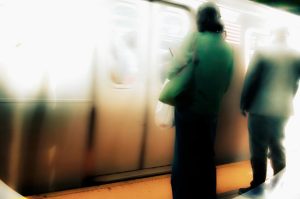
His favorite photo comes from a New York trip that captures exactly this kind of visual storytelling. It features a woman and a man waiting for the subway — a simple scene.
In Derby’s mind, the story in the picture shows a woman waiting for a train uninterrupted, but the man next to her is getting caught up by the light surrounding them. He said the dreamy, hazy quality reflects his feelings about being in the city.
“New York’s always been this kind of dream to me to be at,” said Derby, “so I’ve tried to make a series of photos that were like the dream that I was seeing.”
Even going back into the concert realm, Derby does not try too hard to get the shots he wants, never going into the performance with a set shot list or a plan for getting the best compositions.
He treats these concerts as if he were anyone else in the crowd. When he is rocking along to a song, he does not see himself as a photographer, but as a fan with a knack for photography. He gets into a groove of having fun with the music and catching a great shot at an opportune moment.
Derby cannot help but be anything but himself. This is why he enjoys photography so much — it helps him to be himself and learn more about who that is.
“It’s kind of a shield in a way. I can contribute to society without having to go up to a mic and sing,” said Derby. “I’ve always liked being the fly on the wall, just taking in my surroundings. It helps with mindfulness and it helps with understanding myself. Photography has been such a self-growth learning journey for me.”
In spite of this self-proclaimed introversion, he is still quite a social person. Derby sees the connections he has made in his time at LSU as crucial to his success now.
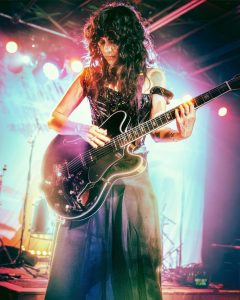
All of the artists he collaborates with in one way or another help him grow creatively. Whether new friends or old, everyone is willing to work with one another and bring about a unique creation.
Derby believes that this is something emblematic of the South and its communities. As opposed to a big city, where everyone is putting themselves in a mold to be the next big thing, smaller places like Louisiana offer a chance for distinctive voices to shine through.
“The kind of community that comes with the South, you find people that are willing to work with you just because you show an interest,” Derby said. “In a lot of other places, they’re willing to work with you because you can benefit them in some way. And I think that’s the difference down here.”
While he has gotten offers to pay for his services, Derby is not concerning himself with monetary value. He sees this art as more than just about the money, and all of his featured photos have been done for free.
Ultimately, what he wants right now is to build his portfolio and his community. In a final message, he encourages people to come work with him and do exactly what he did.
“Your art comes second, but your humanity comes first,” Derby said. “Come work with me — it’s good vibes. You can do it, too. It’s not even been a year, you can find something you love.”
To see Aidan Derby’s portfolio and business inquiries, check out his Instagram.