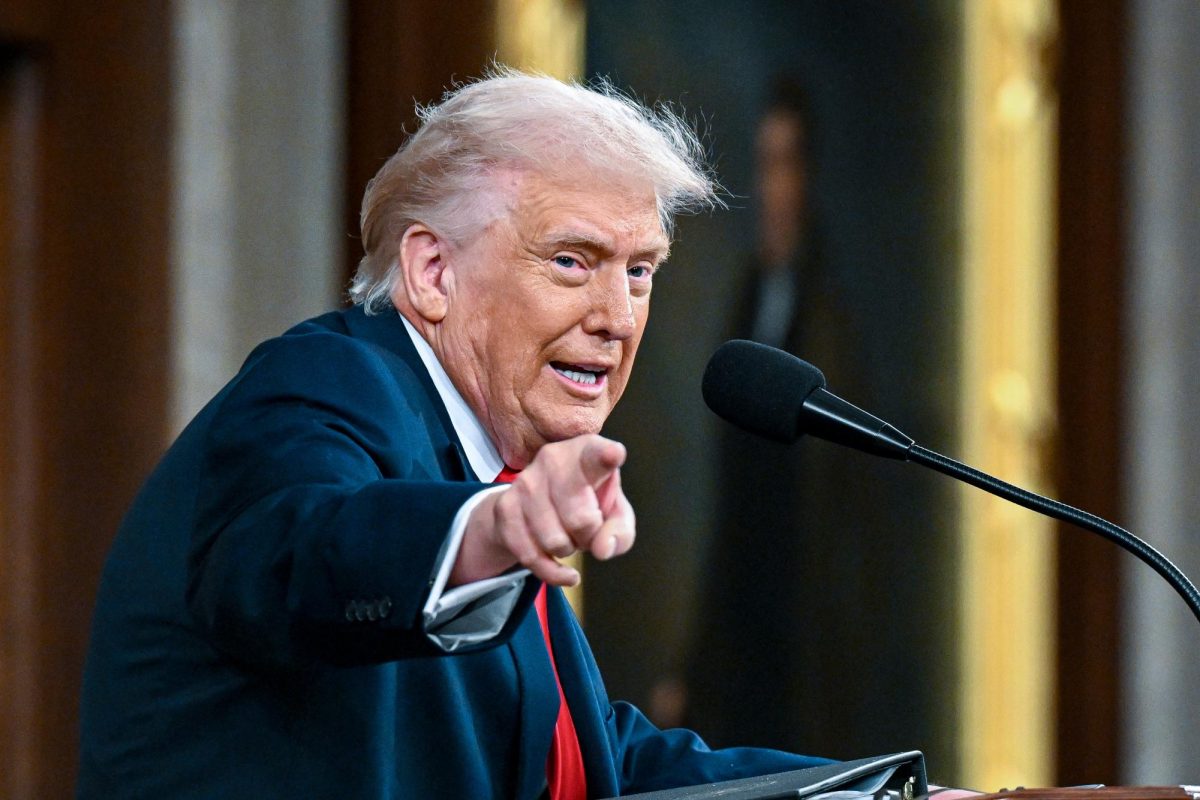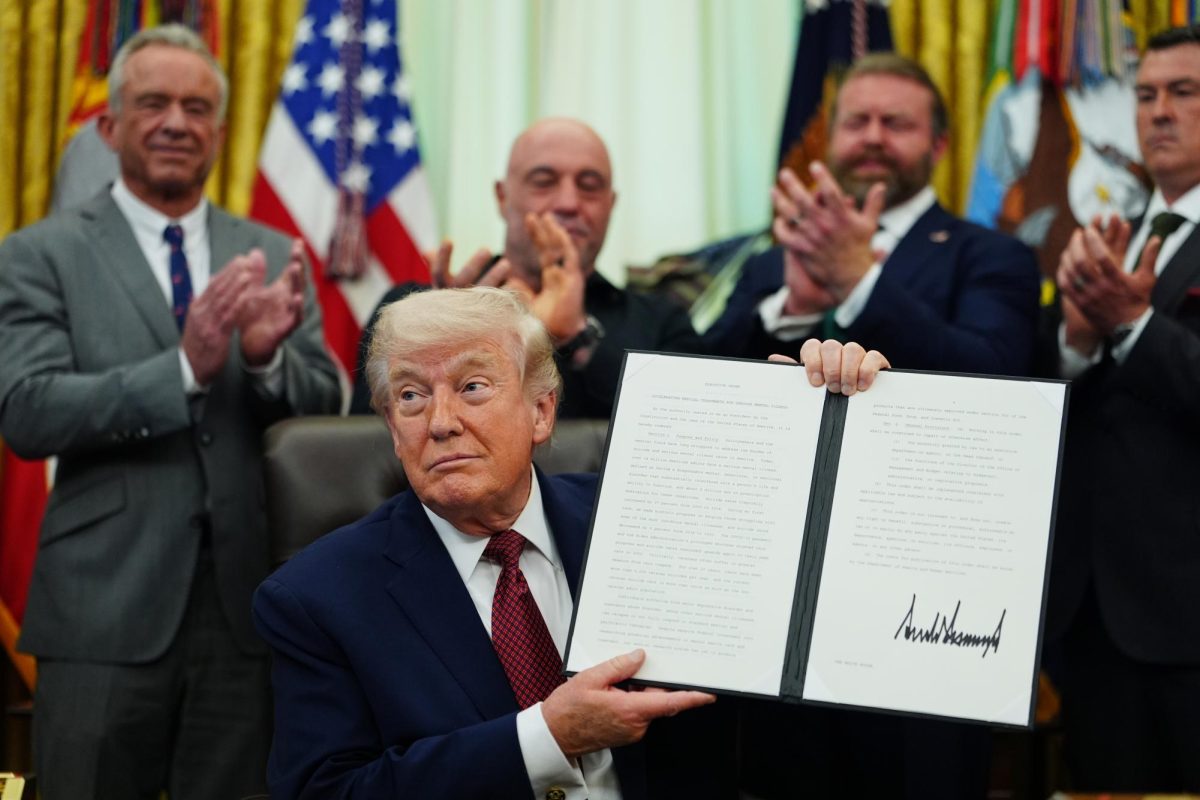
Over the weekend, President Donald Trump signed an executive order titled, “ACCELERATING MEDICAL TREATMENTS FOR SERIOUS MENTAL ILLNESS,” intended to hasten access to psychedelic treatments. The signing was certainly a spectacle, as it often is, but so was the heterogenous group in attendance: President Trump was joined in the oval office by MMA-commentator, podcaster, and bro-science connoisseur Joe Rogan, wellness wizard Dr. Oz, and decorated former Navy SEAL Marcus Luttrell (of “Lone Survivor” fame).
Despite the seemingly eclectic grouping, the intent behind the executive order is both serious and timely: to advance psychedelic substances as therapeutic agents in treating PTSD, depression, and substance use disorders, particularly in veterans. It focused specifically on the psychedelic “ibogaine,” derived from the West African Tabernanthe iboga shrub.
This executive order is of particular relevance to me.
As a Marine, veteran suicide has touched my life personally. I lost a good friend of mine from the service to suicide in 2023. Secondly, I’m deeply invested in psychedelic science, and my hope is to build my career studying their therapeutic application. I’ve spent the last 8 months studying their potential in suicide prevention and presented my findings at the 2026 Suicide Research Symposium. The more I’ve studied these substances, the more I become convinced that they are, to quote a 2017 publication by Watts, et al., “paradigmatically novel” catalysts for healing and change in mental health. That is, they have unprecedented potential, and the science is beginning to back this up, especially for drugs like psilocybin (think: magic mushrooms).
Further, I believe they may help to shake the field of psychology loose from its reliance on pharmaceutical treatments for mental health, many of which are of dubious scientific efficacy but produce significant profit. After all, record numbers of Americans find themselves taking psychiatric drugs, but our collective mental health continues to deteriorate.
All of the above said, our culture seems to deeply struggle, when presented with a promising new idea or technology, with pumping the brakes, taking a deep breath, and assessing the nuance before proceeding. After all, there are real dangers with these substances. For psychedelics such as LSD or psilocybin, these dangers are largely psychological. Their therapeutic potential is rooted in their destabilizing effects—in short, they literally help the brain rewire itself—but so is their risk. They can induce ineffable, positive, utterly life-changing mystical experiences, but they can also induce disturbing, distressing, and difficult ones. With ibogaine, however, its risks are physical: there are serious dangers of adverse cardiovascular events linked to its cardiotoxicity, and it is often used for opioid detoxification in semi-controlled, non-scientific environments because of its legal status. Several deaths have been directly connected to its use.
These substances have been federally illegal since 1970, so all of the research on them has been conducted in the last two decades. We simply do not have a robust and clear scientific picture of ibogaine’s mechanisms, dangers, and therapeutic potential. At this crossroads, we have a serious question to ask ourselves:
How much risk are we willing to take with these substances?
The harder question, though, may be this: with one death by suicide every 11 minutes in the United States, wouldn’t waiting be even riskier?
No matter our answers, one thing is clear to me: we cannot afford to let these substances become just another flashpoint in the American culture war… that is, wholeheartedly embraced or vociferously rejected based on who is championing them, rather than based on what the evidence says. The opportunity is real, and so is the risk of squandering it.
Zoran Allen is a December graduate of LSU now working as a research assistant in an LSU suicide prevention laboratory.