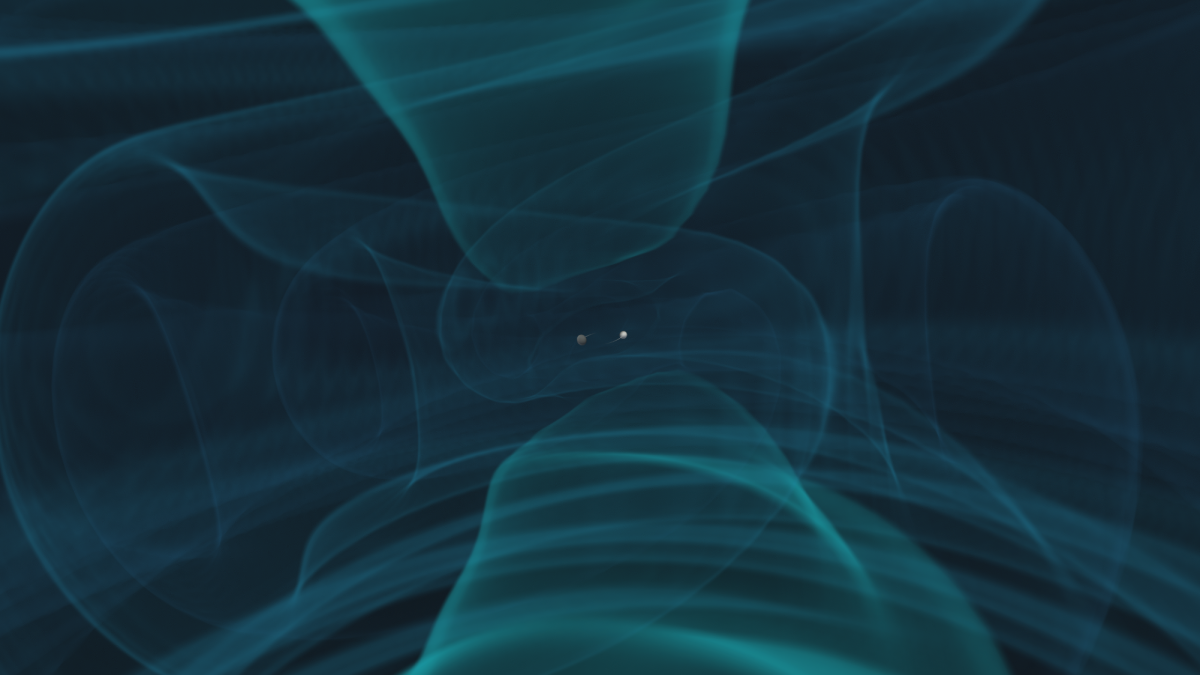
LSU physicists assisted in detecting the most massive merger of black holes in recorded history at the Laser Interferometer Gravitational-Wave Observatory (LIGO) in Livingston, Louisiana, LSU announced.
The two black holes combined to form a black hole that is about 225 times more massive than the Sun and 75 million times more massive than the Earth. The previous largest black hole recorded was 140 times larger than the Sun.
“As we are now approaching a decade of observations after the first detection of gravitational waves in 2015, the LIGO instruments keep delivering surprises, like the mergers of these large black holes,” LSU professor and former LIGO Scientific Collaboration Spokesperson Gabriela González said in a press release. “Scientists in Louisiana and worldwide, including our group at LSU, work hard on improving the astrophysical sensitivity of the detectors, and it pays off.”
The signal of the detected merger was named GW231123.
LIGO is funded by the National Science Foundation, and there are only two LIGO locations nationwide.
The location is Livingston is on LSU property 25 miles from the main campus and has university faculty and students contributing to the site’s work, including graduate student Zach Yarbrough.
“I am incredibly lucky to be a graduate student in LSU’s Experimental Gravity group and part of the LVK during such an exciting time,” Yarbrough said in an LSU press release. “Since joining in Fall 2022, I’ve seen over 200 detections.”
The work at LIGO is another example of collaboration between LSU and the NSF, which in 2024 awarded its largest grant ever ($160 million over 10 years) to the university for the Future Use of Energy in Louisiana, which aims to decarbonize the state’s energy and develop new sustainable technology.