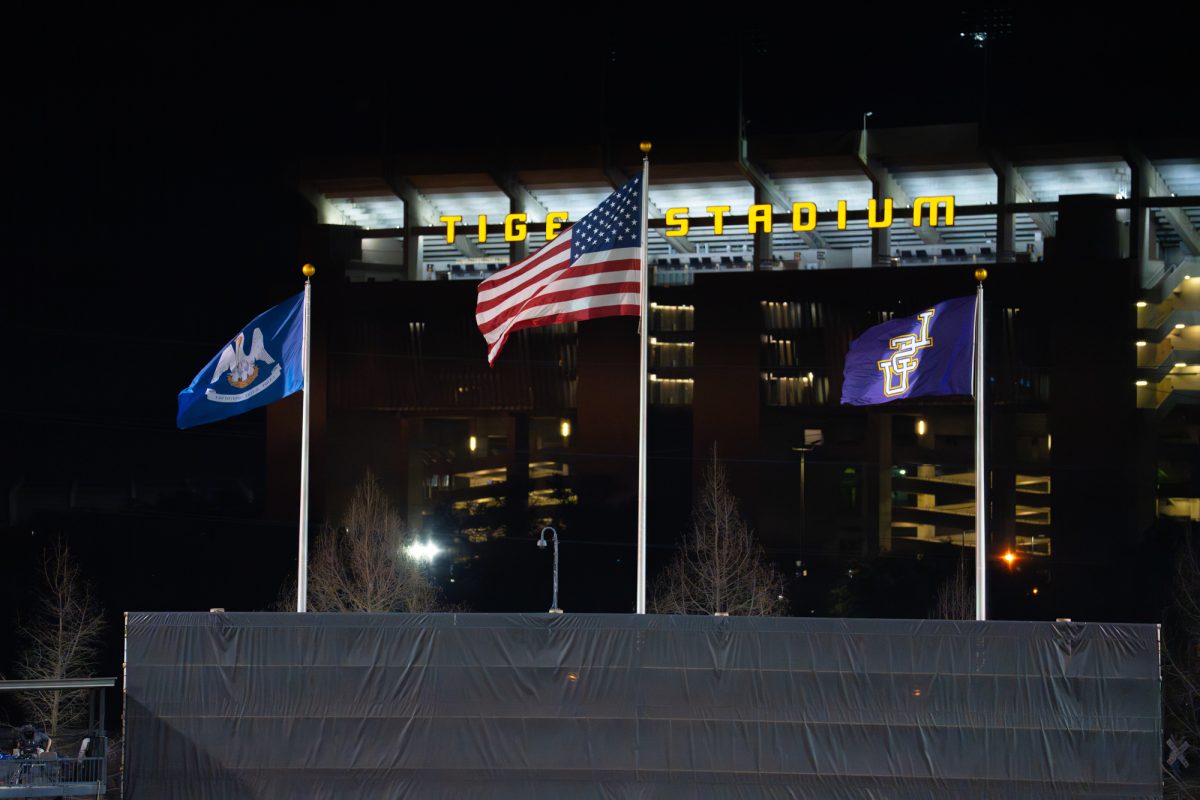
LSU is formally opposing the Protect College Sports Act, a piece of federal legislation that aims to patch several flaws in modern college sports at the national level. LSU President Wade Rousse and Board of Supervisors Chairman Lee Mallett authored the opposition in a statement to Sens. Ted Cruz and Maria Cantwell on Monday.
“For nearly a century, LSU has been at the forefront of college athletics, and we recognize that the important issues facing us today necessitate substantive reform,” part of the statement read. “While we support all the efforts surrounding the Protect College Sports Act, we believe key issues remain with the legislation and we do not support the bill in its current form.”
The PCSA is a bill that advanced through the Senate Committee on Commerce with bipartisan support last month. It provides a set of solutions to challenges that have emerged in the college game over the past half decade, primarily in the realms of NIL, transferring and eligibility.
The bill would change name, image and likeness rules, and though it would enshrine the right for athletes to earn through NIL, it would change reporting rules and could alter a landscape that LSU has dominated in recent years.
Impacts to eligibility rules won’t be as sweeping if the PCSA passes thanks to the NCAA’s recent adoption of the five-for-five rule, but the bill would ban any athlete from participating in college sports if they play professionally anywhere in the world. LSU men’s basketball has recruited out of Europe and will likely have former pro players on its 2027 roster.
Transfer rules also stand to change with the bill’s passing, critically limiting players to a single penalty-free transfer between colleges. The transfer limit would somewhat restrict LSU and other SEC schools’ ability to procure talent from the portal, a significant part of roster construction as it stands.
LSU joins Alabama, Auburn, Texas and Texas A&M as SEC members to formally oppose the bill. The bill has also received pushback from several schools in the Big Ten, another power conference in college athletics.
Rousse and Mallett showed a desire to work with Congress and other college athletics programs to find alternate solutions to the problems covered in the PCSA.
“We look forward to working with the House, the Senate, and our fellow institutions in the Southeastern Conference to make the needed improvements to this legislation,” the statement said. “We are hopeful that together, we can support a bill that will truly help ensure college athletics is preserved for our students and all higher education institutes.”