This article is part of the Reveille’s LSU football preview coverage. Read all of it here.
It’s a debate that’s been raging for decades. Who’s more deserving of the name “Death Valley” — LSU or Clemson?
Student writers from LSU and Clemson settled the score. Who do you think made the better case?
Brett Kemper, LSU Reveille Sports Reporter
The hype for this Saturday’s LSU-Clemson matchup is sky-high. Playoff stakes, pride, bragging rights, all of it’s on the line. But there’s one debate that towers above them all: which school really owns the name “Death Valley?”
Clemson insists that Memorial Stadium, named in honor of alumni who served in World War II, wasn’t a strong enough identity, so they slapped “Death Valley” on top of it in the 1940s and have been holding on tight ever since.
Cute branding, but let’s be honest: there’s only one stadium that actually lives up to the name, and in the words of Dan Borné, “It is a pantheon of concrete and steel.”
First, size matters.
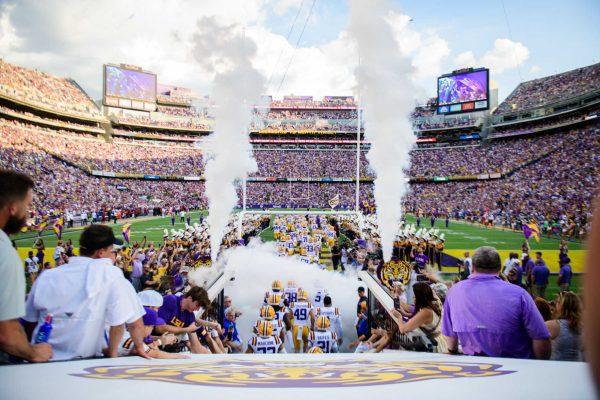
Tiger Stadium in Baton Rouge seats 102,321 fans. Memorial Stadium? 81,500. That’s a 20,821-person gap, essentially equivalent to the entire capacity of an SEC stadium. In Death Valley, volume counts. Tiger Stadium doesn’t just get loud; it swallows visiting teams whole.
Second, history.
Clemson points to Presbyterian coach Lonnie McMillan, who referred to their place as “Death Valley” in the 1940s. A nice piece of trivia, but LSU was already known as “Deaf Valley” by the 1950s, because the stadium was so deafening that opponents couldn’t hear themselves think.
The nickname naturally evolved into “Death Valley” after a legendary Sugar Bowl win in 1959 over none other than Clemson. Following the 7-0 victory, LSU became nationally recognized as the real Death Valley.
And then comes the deal breaker for Clemson: two very important numbers, 42-25.
That was the final score of the 2019 national championship in New Orleans, when Joe Burrow and LSU didn’t just beat Clemson, they sent them packing back to “Dead Valley.”
If Death Valley means the place where opponents’ dreams go to die, that night made it clear whose valley actually owns the title.
Clemson brags about Howard’s Rock and “the most exciting 25 seconds in college football,” which, when you break it down, consists of running down a hill.
The only hill at LSU is Victory Hill, which leads straight into the heart of Death Valley.
Ask a casual college football fan where “Death Valley” is, and they’ll say Baton Rouge. They’ll picture Mike the Tiger, the Golden Band from Tigerland and a Saturday night roar that rattles TV speakers across America.
So yes, Clemson coined the phrase, but LSU embodies it — bigger, louder and, when it mattered most, better.
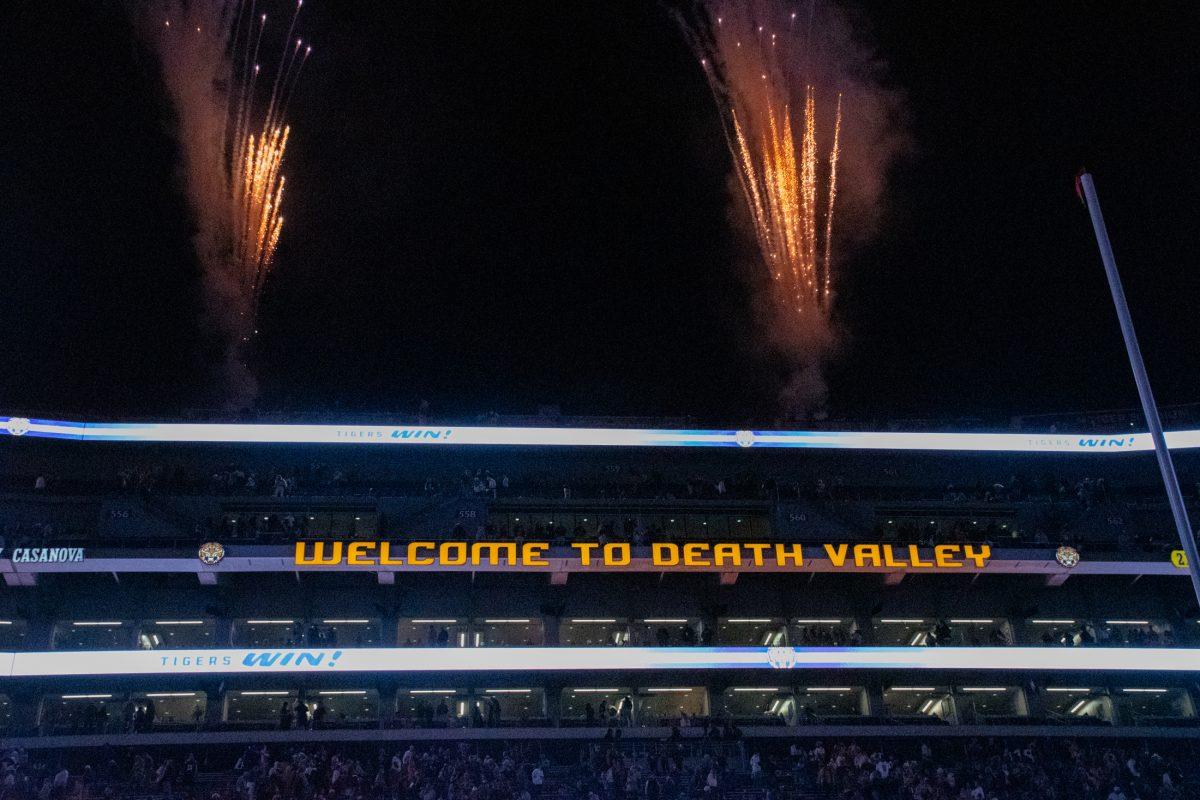
The real Death Valley isn’t in the hills of South Carolina. It’s in the walls of Tiger Stadium, where noise becomes legend, where opponents’ seasons go to die.
The real Death Valley lies in the heart of the bayou, on the banks of the Mississippi and at the bottom of Victory Hill.
Griffin Barfield, The Clemson Tiger Sports Editor
There are too many traditions and history behind Clemson’s Memorial Stadium not to allow it to hold the true title of Death Valley.
It’s got history behind it. Former Presbyterian head coach Lonnie McMillian coined the title after losing so many times to the team in the 1940s, and many teams have continued the tradition since.
Clemson had the moniker first, with LSU later establishing its stadium with the same name in the 1950s.
Compared to LSU’s Tiger Stadium, Clemson has a little bit more of an edge. The Tigers have won 76.1% of games at its Death Valley, while LSU has only won 72.7% of games in Tiger Stadium. Yes, both teams have won a majority of their games, but the Bayou Bengals maintain lower stats overall while playing many more night games, which attests to their quality.
The traditions of the game mean more in Tigertown. While the excitement behind a hype video and running out in between the band is amusing, Clemson takes it to another level.
Clemson’s hype videos have an alumnus, like Brian Dawkins or Ben Boulware, getting you fired up with highlight montages finished with Frank Howard’s iconic quote of “If you’re not going to give 110%, then keep your filthy hands off my rock.” It’s the suspense of the buses meeting right under the jumbotron and waiting to see an energetic Dabo Swinney run down the hill into the stadium with the team following behind.
Let’s also not forget that Clemson’s Memorial Stadium is the only one of two with an actual grass hill inside. You can’t be called Death Valley without having a real hill in your stadium.
It’s called “the most exciting 25 seconds in college football” for a reason. Touching Howard’s Rock before racing down the hill while chants of each letter in Clemson echo across the Upstate. If you’re a student or home fan, it’s something you look forward to every game.
For visiting fans, it’s a moment in college football that you will never forget.
While LSU’s Tiger Stadium holds over 100,000 fans per game, a packed Memorial Stadium can be just as loud. Games like Clemson’s win over Notre Dame in 2015 and Louisville in 2016 saw Tiger fans make an impact with penalties and showing out in the craziest of conditions. It has created an iconic history that fans will never forget, some even remembering exactly where they were when the games occurred.
Death Valley has tradition. It coveted the name first. It has some of the most iconic rituals that college football is known for. Why wouldn’t Clemson’s Memorial Stadium be the real Death Valley?
You tell me on Aug. 30.
Which Death Valley is the best?
Sorry, there was an error loading this poll.