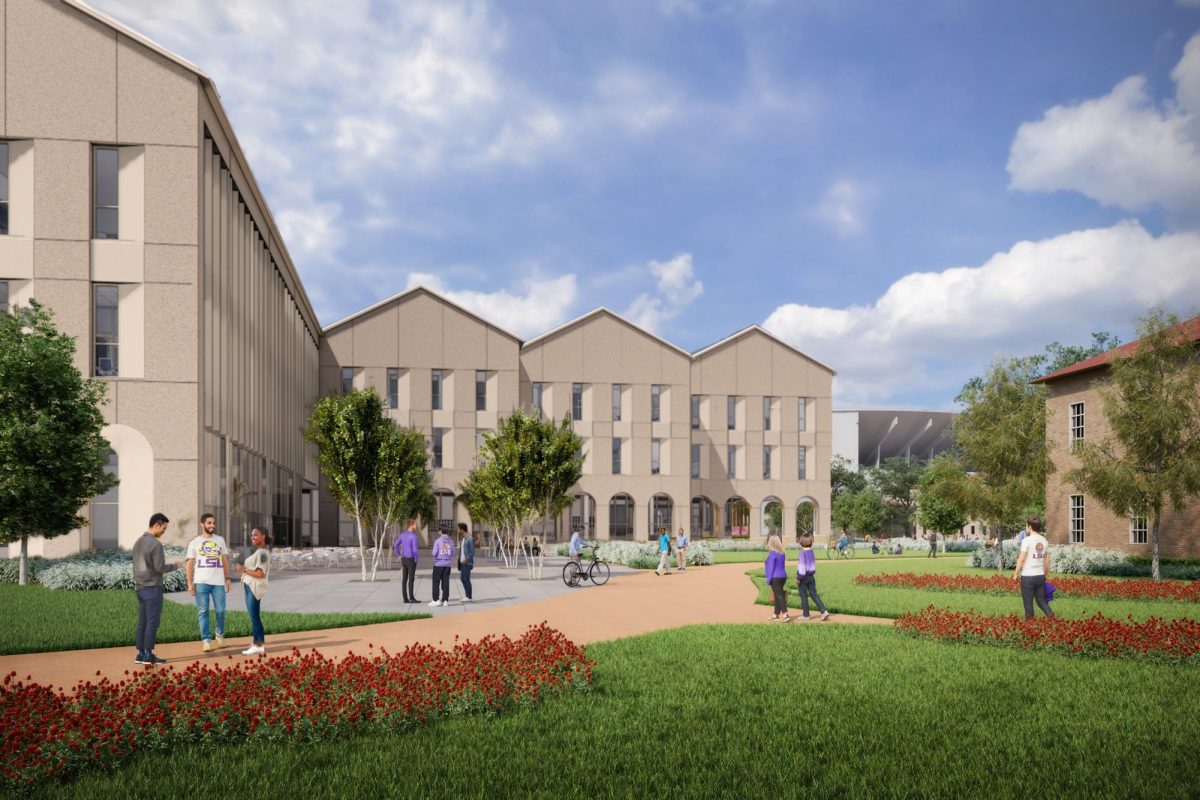
The LSU Energy, Coast and Environment Building will be closed for six to eight weeks after indications of perchlorate salts were found in fume hoods and exhaust fans in its research labs. The rotunda will remain open.
An advisor from the College of the Coast and Environment emailed students Aug. 23 to inform them the building was closed due to “safety issues.” Though classes and labs were moved to different buildings, CCE Dean Clint Willson said the perchlorate salts are not a threat to students’ health.
The building is home to numerous research labs where ongoing experiments require fume hoods because of the chemicals being worked with. The fume hood takes the chemical out of the lab, through the roof and safely into the atmosphere.
Over the last several years, CCE and LSU Facilities Services recognized they needed to repair and upgrade their fume hoods and ducts.
After designing the upgrades and receiving the funding to execute it, the next step was to test the fume hoods and ducts so they could hire a contractor. The results showed positive readings for perchlorate salts in some of the fume hoods and exhaust fans. With the possibility that there are some of these salts in the ducts, Willson said contractors cannot complete the necessary repairs.
Perchlorate salts are used in explosives, fireworks and rocket propellants. Willson emphasized that the building is not closed because of a health hazard, but instead to prepare for the renovation of hoods and fans the college has been planning for two years.
“This remediation needed to occur because of the possibility of some of these salts being in the ductwork and the repair can’t get started,” Willson said.
The email said classes would be moved to buildings around campus, research labs would be reassigned or paused and advising meetings would be moved to Zoom. Despite the unexpected closure being a disruption so early in the semester for students, Willson said the faculty and staff have gone the extra mile to support them.
“We’re making every effort to make sure the classrooms they’re in have been reassigned to are of quality,” Willson said.
Willson said the small size of CCE has made it a tight community that has come together during this unfortunate road block.
“That is the thing that has really been very rewarding to be reminded of — not surprised — of what a great group of students, staff and faculty we have and what a great community, and see the teamwork to get this done,” Willson said.
Once the remediation is finished, Willson said most activities in the building will likely resume. Lab work will depend on when repairs are made on the different fume hoods. He said that when the time comes around, it will be up to the faculty if they want to move their classes back to the building.
“However, we would like you to remember that a building is not a college. The College of the Coast and Environment is made up of the faculty, staff, and most critically, you, the students,” the email that went out to students read.