On Oct. 29, 2025, the denizens of the Netherlands went to the polls to elect a new parliament following the collapse of the incumbent right-wing coalition government. For much of the night, the ruling Party for Freedom, or PVV, a far-right populist led by long-time Dutch politics fixture Geert Wilders, led in the polls.
However, late in the evening, the centrist liberal Democrats 66 surged ahead to tie the PVV as the largest party in the House of Representatives, and as the recipient of the highest popular vote, have received the first chance at forming a government.
So, why should you care about an election in a nation across the sea three times smaller than Louisiana?
Well, the Netherlands actually plays a much greater role on the world stage than you might realize, and policy shifts in the nation can have a significant ripple effect regionally and globally.
Despite what its small size may indicate, the Netherlands is one of the most important global economic and political hubs. The port of Rotterdam is Europe’s largest, moving 436 million tons of freight every year. It regularly ranks as one of the best countries in Europe to do business, and as such, hosts dozens of major multinationals’ European headquarters, including Tesla, Cisco and Nike.
The significant economic might of the Netherlands, along with deep historical roots based in Dutch support for American revolutionaries, has thus led to deep economic ties between the American and Dutch economies. Many Dutch companies are mainstays in America, like Heineken and Stellantis, and Dutch-U.S. trade supports over 1 million American jobs as well.
The state of Louisiana too has a unique relationship with the Netherlands. Shell is one of the largest investors in the state, with the Shell Norco facility in St. Charles Parish alone generating $71 million in taxes per year though the environmental consequences of its operations have been immense as well.
The Dutch government of the past year has been relatively unstable, resting on a shaky coalition of the largest right-wing parties in the Netherlands, most of whom were initially highly reluctant to work with the PVV due to the cordon sanitaire, an informal agreement amongst the parliamentary parties to freeze the PVV out of government.
The return of the D66 from near-death under the leadership of Rob Jetten thus presents a renewed opportunity for the Netherlands to commit to a decisive economic policy, especially one that prioritizes European partnerships, relationships which the PVV have been highly critical of. It remains to be seen, however, whether the centrist party will lean more to the left or right when determining its economic direction.
The D66’s pro-European stance will certainly have a significant regional impact as well. The Netherlands usually maintains a prominent role in European diplomacy but that role has receded over the past year in the weak Schoof cabinet. A D66-led cabinet will almost certainly mean a full recommitment to collaborative policies with other European countries.
However, there is one major issue where the D66 remains somewhat vague: immigration, one of the key issues dividing the European Union. This is where the D66’s ideological flexibility may truly afford it major power within European policy. The D66 currently advocates a streamlined asylum process, but it has also at times leaned conservative in its immigration rhetoric. Thus, it is likely the Dutch will serve as key mediators between European partners with contrasting migrant policies.
Global liberal parties have a lot to learn from the D66. Its model of pragmatism differs greatly from that practiced by the Democratic Party here. Democratic “pragmatism” usually involves refusing to stake out clear policy positions, relying excessively on buzzwords like hope and change, and promises of incremental, measured change. The D66 was similarly non-ideological, and its platform remains vague in many areas, but it actually sought to reach out directly to voters and was unafraid to incorporate bold, popular policies into its agenda.
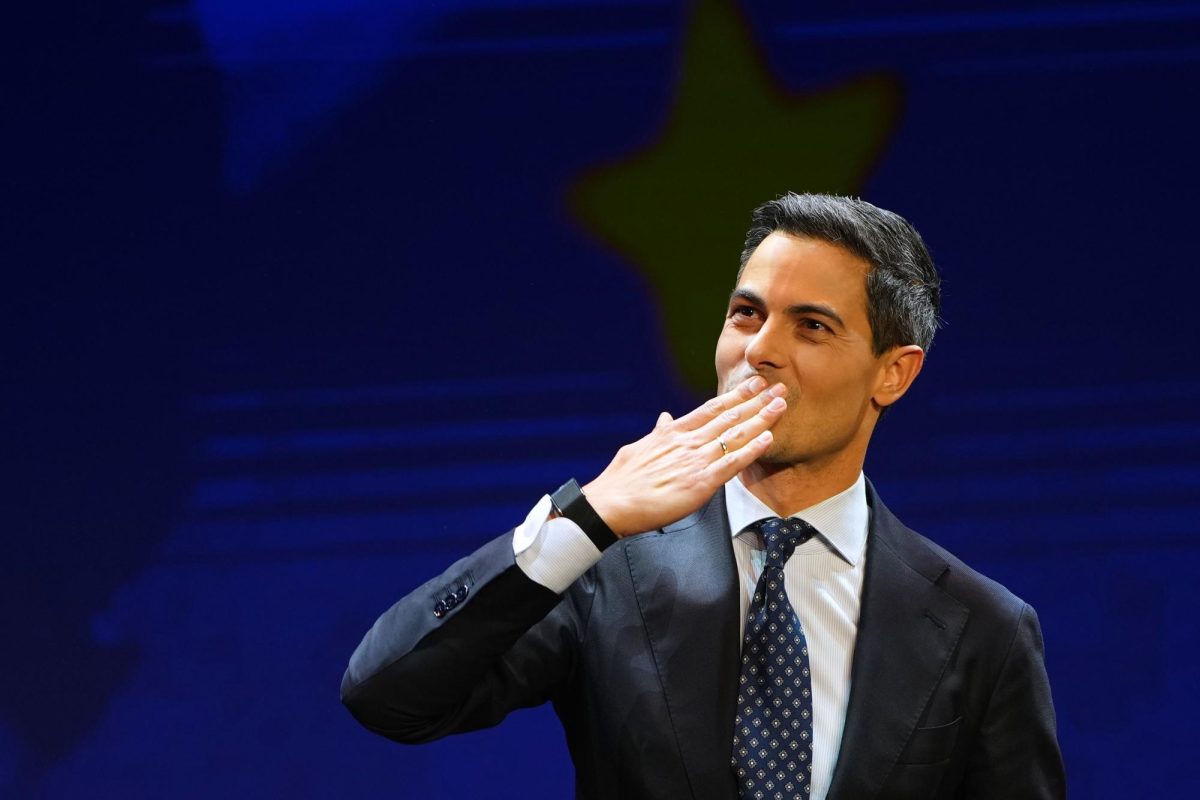
Jetten’s personal transformation from a stiff and awkward bureaucrat to an energetic young visionary should also serve as inspiration for Democrats here. Jetten was successfully able to leverage his party’s time out of government to reinvent himself and his party as a formidable opposition force. While Jetten is set to be both the youngest and first gay prime minister of the Netherlands, he de-emphasized identity politics and instead presented himself as a competent figure who can get policies passed and effectively take on the far-right.
Democrats could learn a lot from a leader like Jetten. Go directly to the people, be unafraid to take a bold stance, and even a party in shambles can come out of nowhere and give the establishment a kick in the teeth.
Gordon Crawford is a 19-year-old political science major from Gonzales, La.