LSU’s Student Government has introduced a new AI Taskforce, designed to reduce the number of students falsely reported to the Student Advocacy and Accountability office for AI misuse.
Student Body President Lavar Henderson launched the Taskforce earlier this semester after LSU began facing backlash about the number of AI-related reports the SAA office was receiving. This semester alone, SAA fielded over 1,000 AI-related student misconduct cases.
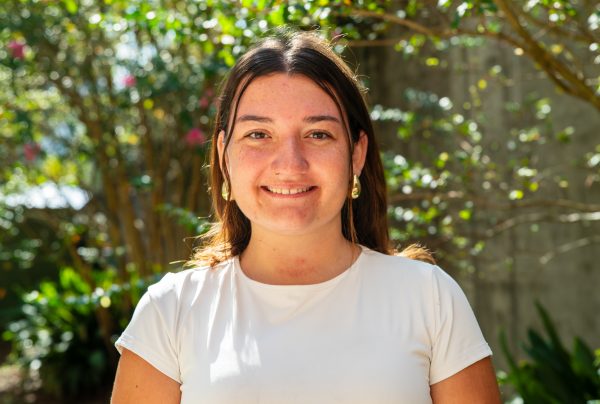
Henderson appointed two co-chairs to lead the committee: James Williams III, a music performance junior and chair of the Student Senate’s Academic Affairs Committee, and Jude Terrell, a political science junior and the president and co-founder of the Student Alliance for AI reform at LSU.
“As someone who has focused so much on academic affairs in my time at LSU, AI is a major contributing factor to the decline in public trust of higher education institutions,” Williams said. “To me, that is a problem at the national level.”
Williams stated that the goal of the taskforce is to work with the SAA office to clarify the guidelines for AI use. They hope to find ways to minimize the number of false AI misuse allegations while maintaining the university’s standards for academic integrity.
The Taskforce is currently working with SAA to establish what qualifies as valid evidence in a case for AI misuse — and how AI detection technologies like Turnitin should factor into misuse cases.
“There’s no official policy statement regarding how Turnitin is used in the case review process, and there’s no real specific policy on cheating or misrepresentation,” Terrell said.
The taskforce is particularly concerned with how SAA frames the burden of proof in misuse cases.
Currently, professors can escalate misuse allegations with nothing more than a Turnitin percentage. If Turnitin flags a student’s assignment as AI-generated, a professor can report that student to SAA without ever meeting with that student or attempting to resolve the misuse dispute informally.
The Taskforce aims to raise the evidentiary standard for reporting students to SAA for AI misuse, requiring professors to provide more evidence than just a Turnitin receipt.
They also hope to find ways to de-escalate AI misuse allegations before students are reported to SAA.
“The goal of the taskforce is to resolve that issue before the recommendation, with student body interest in mind, to correct the issue, basically stemming the tide of new cases being brought up,” Terell said.
They also hope to make it easier for students to discuss AI use with their professors before turning in assignments.
“We’re trying to make it less scary for the student to approach the teacher, which means embracing transparency,” said Aaron Lomastro, a construction management junior who serves on the Taskforce. “From the student side and the teacher side, we’re just really emphasizing and facilitating more conversations between teachers and students when it comes to how AI is used in the classroom because every teacher teaches differently.”
The taskforce hopes that these preventative measures can reduce the number of AI misuse cases reported to SAA.
They also hope to give students resources to advocate for themselves if they are reported to SAA.
The taskforce encourages students to familiarize themselves with AI policies and how they are implemented. They also recommend that students draft their writing assignments in Google Docs as a safeguard against false misuse allegations.
“A Google Docs version history of your writing process is the best evidence you can provide for yourself,” Williams continued. “It’s an extremely strong piece of evidence.”
The taskforce has also worked closely with LSU Communication Across the Curriculum to help faculty members redesign or rethink aspects of their courses in a post-AI world. They have also worked alongside the Faculty Senate, the Office of Academic Affairs and the communication studies department.
Williams said that the taskforce had met with the director of SAA, Jonathan Sanders, where they discussed how the Taskforce can help communicate the office’s expectations for AI use to the student body.
Each member of the taskforce is currently doing research on AI usage in order to broaden the scope of information and inform policy changes at LSU.
There are currently around 13 members of the Taskforce. In the future, they hope to expand to incorporate perspectives from a variety of students across campus — including graduate students and law students.
The taskforce is open to hearing student concerns and recommends that students with any questions reach out to the members directly and are open to hearing student concerns.